
Cost per trip is the comparison that makes reusable packaging decisions obvious, and it takes four numbers. Most buyers have two of them and guess at the other two, which is how bad decisions get made with confident arithmetic.
The formula
Take the purchase price, add the lifetime cost of keeping the item in service – washing, repair, any tracking – and divide by the number of trips you actually get. That is your cost per trip. Compare it with the delivered cost of the single-use item it replaces, per trip, and the answer is usually clear.
Input one: purchase price, landed
Not the ex-works price. Landed cost – including freight, duty and any handling at your end – is the number that went out of your bank account, and on bulky packaging freight is a large fraction of it. A cheap unit price with expensive freight is not a cheap unit.
Input two: trips achieved
The one everyone overestimates. Trips achieved is not trips possible in a laboratory; it is trips you get in your loop, with your handling, before the item is lost, damaged beyond use, or retired. Measure it on a pilot rather than assuming it – a dozen tracked items over three months gives you a defensible number.
Attrition belongs here. If five per cent of the fleet disappears each cycle, the average trip count is capped by that regardless of how durable the item is.
Input three: cost per cycle
Washing, if the application needs it. Repair, where it is done. And the handling cost of the return leg – which is the input most often left out entirely.
A return that rides on a vehicle already going that way costs close to nothing. A dedicated collection costs the full journey, and on a low-value item it can exceed the packaging cost entirely. This is why the return leg belongs in the model from the start rather than being discovered later.
Input four: residual value
PP is recyclable and scrap has value. It is small, it is uncertain, and it is honest to include it as a modest credit rather than a large one. Worth a line, not worth an argument.
What the number usually shows
In a closed loop with a natural return, reusable PP packaging beats single-use comfortably and the margin is not close. In an open loop with meaningful loss, the comparison is much tighter, and sometimes reverses. Work it out rather than assuming either.
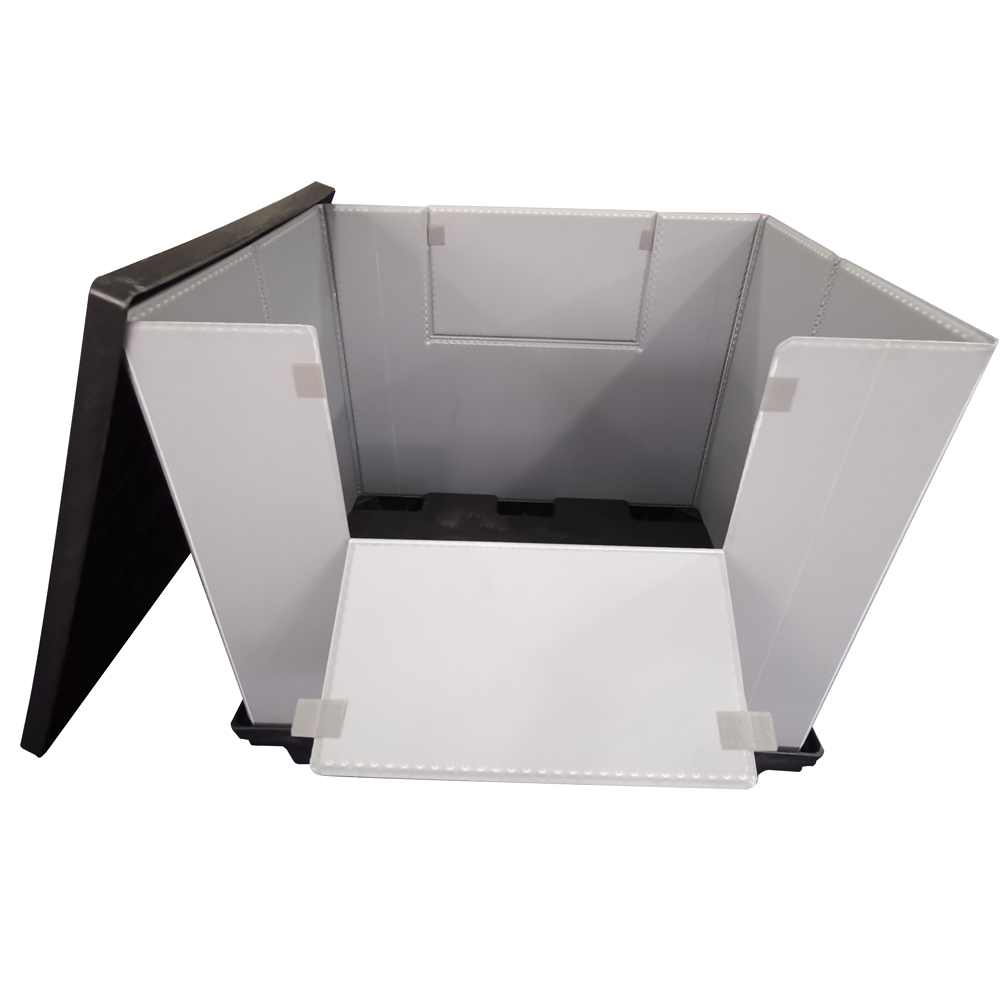
The sleeve-specific version, with the assumptions laid out, is in estimating pallet sleeve payback.
A worked shape
A reusable item costing five times the single-use alternative, achieving twenty trips with a small servicing cost per cycle, lands somewhere near a third of the single-use cost per trip. The same item achieving six trips is roughly at parity. Below that, single-use wins.
That is the whole sensitivity: the answer is dominated by trip count, not by price. A ten per cent price negotiation changes the outcome far less than getting two more trips out of the loop – which is where the effort belongs.
What to do with a marginal result
If the comparison comes out close, the deciding factors are usually non-financial: a customer requirement, a waste obligation, or a handling improvement. Say so explicitly rather than stretching a number to make the case – a marginal financial case plus a real operational reason is a stronger proposal than an optimistic one.
What we can do
We supply pallet sleeve boxes for warehouse distribution and will put our trip-count assumptions in writing so you can challenge them. Tell us your loop – where it goes, how it comes back – and we will build the model with you, including the parts that make the answer worse.