
A pilot tells you whether something works. A rollout tells you whether it works at scale, and those are different questions. The mistake is going straight from a successful pilot on one lane to a fleet-wide conversion.
What a pilot answers
Does the product do the job, on one lane, under real conditions. Damage rate, whether it comes back, how long it takes to handle. One lane, twenty units, six months – that is enough to answer it.
What a pilot cannot answer
What happens when you have four hundred of them across six sites. Scaling exposes things a single lane does not: items migrating between sites, collection getting harder as the network grows, wear rates that only become visible across a larger fleet, and the administrative load of tracking it all.
These are not product failures. They are scale failures, and they are invisible at pilot size.
The middle step
Convert two or three lanes and run them for another six months. That is enough to surface the scale problems while they are still cheap to fix, and it gives you a second data point on wear rates.
It is tempting to skip this because the pilot went well. The operations that skip it are the ones that discover in month nine that a third of the fleet is somewhere it should not be.
What to put in place before scaling
Counting, at each site. A tally at goods-in and goods-out is enough and it must exist before the fleet grows, because establishing it afterwards means admitting the fleet is already unaccounted for.
Identification, if it is not already there. And a named owner for the system – somebody whose job includes whether empties come back.
When to go straight to full launch
Rarely. If the change is low-risk – a like-for-like swap with no process change – a full launch is defensible. If it changes how a pallet is built or how a loop works, it is not.
The test is whether a failure at scale is expensive. If it is, stage it.
What to measure at each stage
Pilot: damage rate against a baseline taken before the boxes arrived, return rate, and handling time against the current method. Three numbers, and the baseline is the one people forget – without it you have nothing to compare against.
Middle stage: the same three, plus migration. Where the items physically are at the end of the period, by site. That number is the one that predicts whether a full fleet will stay together.
Full launch: the same, plus the administrative load. If counting and chasing is consuming a person’s week at full scale, that is a cost of the system and it belongs in the business case.
What a failed middle stage looks like
Usually not a product failure. It is empties accumulating at one site, items migrating to applications they were not bought for, and a return rate that holds on the original lane and collapses on the new ones.
All three are fixable at three lanes and expensive at thirty – which is the entire argument for the middle stage.
What we can do
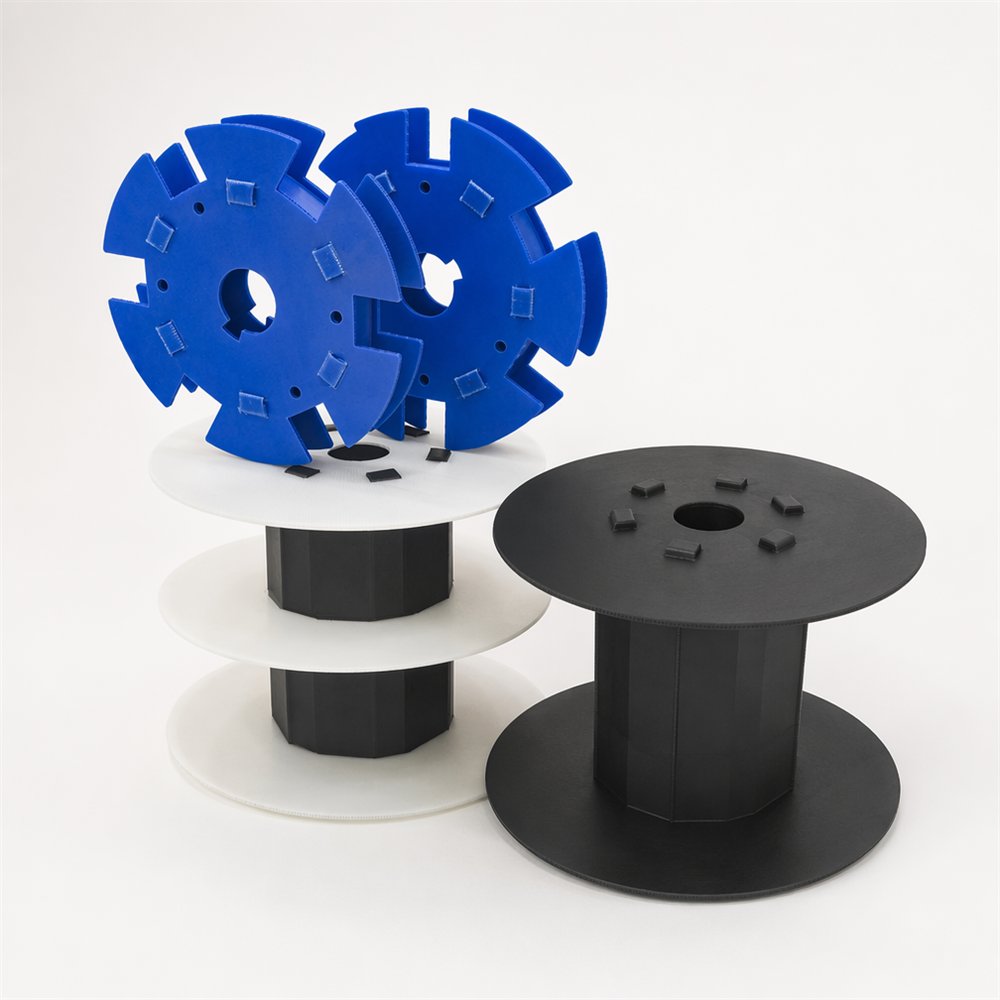
We supply plastic reels for FTTH deployment and will help plan a staged introduction. Tell us the lane and the eventual scale, and we will tell you what to run at each stage – including what to count before you grow.