
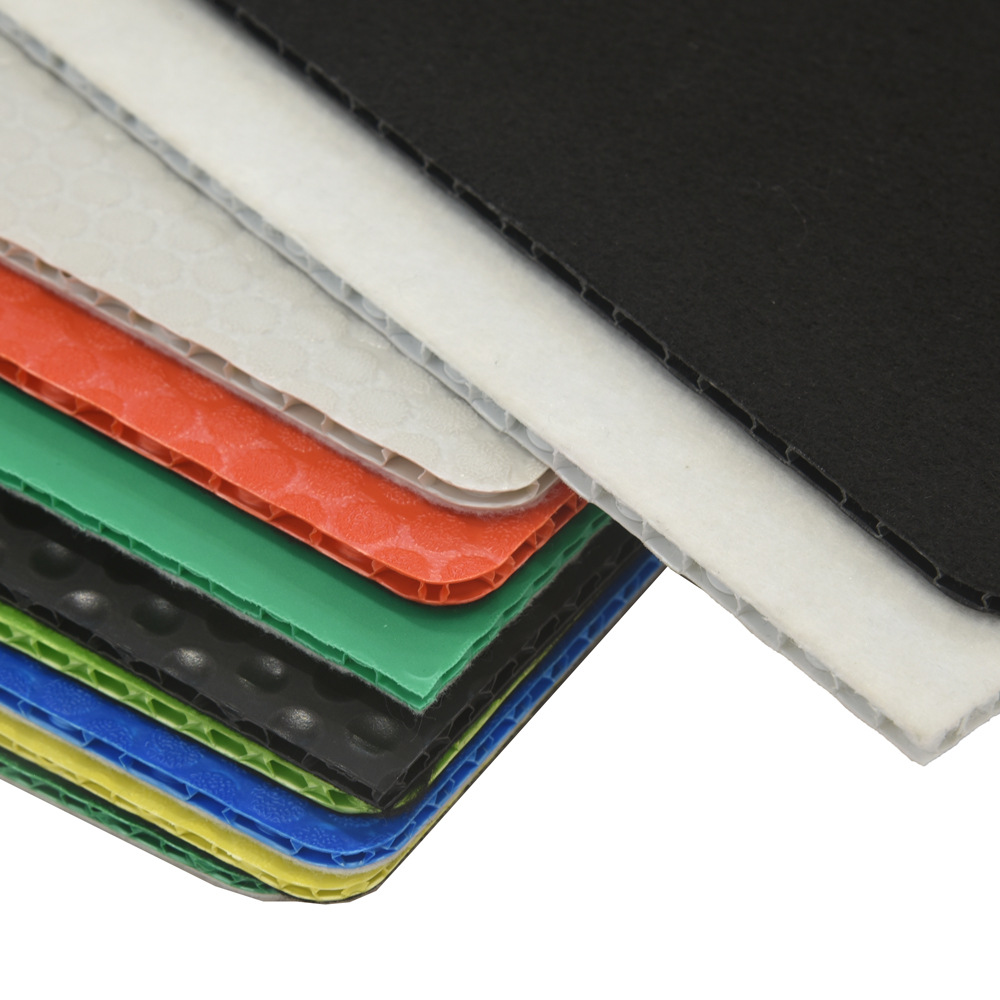
Most panels that fail early were not defective. They were specified wrongly, and the specification error was invisible at the time because it looked like every other panel order. Four mistakes account for the large majority of what goes wrong.
Mistake one: thickness by imitation
Someone orders the thickness that was used last time, or the thickness a colleague mentioned, or the thickness that was available. Nobody has checked it against the span and the load.
This works until the application changes – a different pallet, a heavier product, a longer dwell – and then panels start failing and nobody connects it to the specification. Working out what thickness you need takes about ten minutes. We set out how in what thickness honeycomb panel you need.
Mistake two: quoting a compressive strength figure
Compressive strength is measured through the thickness. It tells you how well the panel resists being crushed flat, and almost nothing about how well it spans. Panels are usually bought to span something.
If a quote leads with compressive strength and cannot produce a bending or deflection figure, you are comparing numbers that do not describe the failure mode you are worried about.
Mistake three: ignoring the storage question
Panels are loaded, warm and stationary for weeks in transit. Polypropylene creeps under sustained load and creeps faster when warm. A panel that was fine on a test bench for an hour sags over a month in a container.
This is the mistake that produces panels arriving curved, and it is usually diagnosed as a manufacturing defect. It is not. It is a specification that did not account for time and temperature.
Mistake four: buying one thickness for every job
A single thickness across an operation is administratively convenient and almost always wrong somewhere. The light jobs are over-specified and the heavy ones under. Two thicknesses usually cover everything better than one and cost less overall, because the expensive thick panels are only used where they are needed.
A fifth, smaller one
Not ordering edge sealing when panels are washed or stored outside. An unsealed edge lets water into the core and gives delamination somewhere to start. It costs very little and it is the cheapest durability upgrade available.
And a sixth, which is not a specification error at all: storing panels leaning against a wall. They take a curve from their own weight. It is free to avoid and it ruins perfectly good stock.
One more: not testing the actual conditions
Panel specifications get written from a description of the application rather than from the application. The pallets in the drawing have full decks; the pallets on site have gaps. The load is described as distributed; the product has feet. The transit is described as two weeks; it is six.
Every one of those gaps makes the specification wrong, and none of them are visible to whoever writes it.
The fix is cheap: go and look at a real pallet, time a real cycle, and check what the panels will actually sit on. Ten minutes on the floor is worth more than any amount of specification review.
What we can do
We supply PP honeycomb panels and would rather ask four questions than ship a thickness nobody calculated. Tell us span, load, dwell time and storage, and we will specify – including when two thicknesses serve you better than one, and when a cheaper sheet will do.