
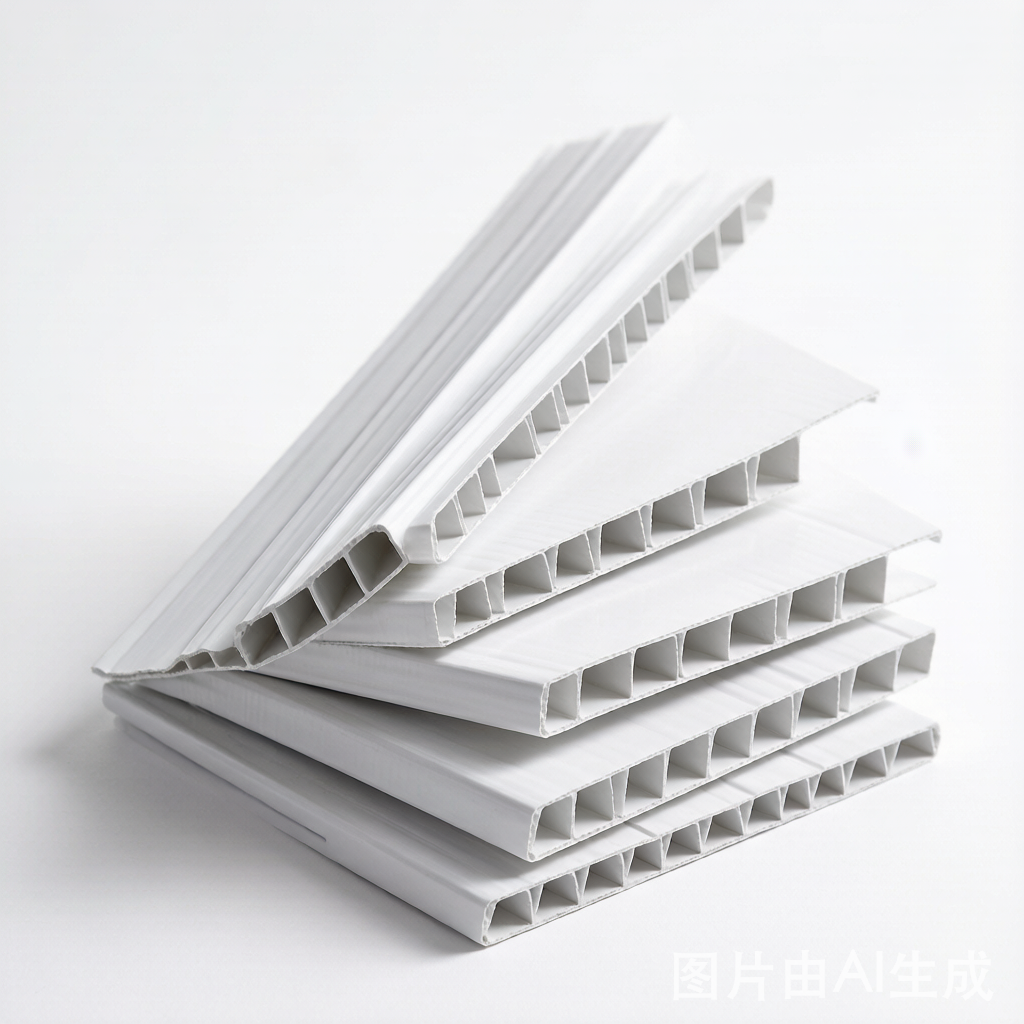
Lining a container floor is a common use for corrugated sheet: it keeps product off a dirty deck, spreads load, and gives a clean surface to load onto. Working out how much sheet you need is mostly a matter of floor area, with two adjustments that people forget.
The floor area
A twenty-foot container has roughly fourteen square metres of floor; a forty-foot has roughly twenty-eight. If you are cutting sheet to fit, that is your starting point, and the sheet area needed is the floor area plus a margin for cuts and overlaps.
Adjustment one: the floor is not flat
Container floors are built on cross-members, and the deck has a profile. Sheet laid directly on it bridges the gaps, and thin sheet will sag into them and eventually crack along the line of a cross-member. So the sheet has to be thick enough to span the gap between supports – the same problem as a pallet topper, and it is worth doing the same calculation.
If the load on top is distributed – boxes, bags – a lighter sheet will do. If the load is concentrated on feet or on a small footprint, it will not.
Adjustment two: joints
Sheet comes in widths, and a container floor is wider than most sheet. So the lining is several strips, and the joints need dealing with. Butted joints let dust through and shift under load; overlapped joints hold better under load and use more sheet.
Taping the joints is worth doing. An untaped joint is a trip hazard during loading and a place where the sheet lifts and tears once product starts moving over it.
Whether to line the walls too
Sometimes worth it, usually not. Wall lining protects against condensation running down the container sides, which is a real problem on some lanes, and it costs sheet and time. If your product is moisture-sensitive and the lane is humid, lining the lower metre of the walls is often enough.
Sheet used outdoors or in a damp environment should be a grade that does not care, which it does not – polypropylene is indifferent to moisture. We covered that comparison in PP sheet versus cardboard layer pads in export.
How much to order
Floor area, plus a cutting margin, plus overlap on the joints, plus a wastage allowance for a first attempt. And order one container’s worth extra – sheet is cheap relative to a delayed loading, and the offcuts are always useful for dunnage.
Whether to line at all
Worth asking before ordering. A container that is clean, dry and carrying palletised goods on intact pallets does not need a floor liner – the pallets are the interface and the floor is doing nothing harmful.
Liners earn their place in three cases: a dirty or damaged floor, product loaded loose rather than palletised, and a humid lane where condensation runs and pools under the load. If none of those apply, the sheet is a cost with no benefit.
That said, sheet is cheap relative to a claim, and plenty of operations line as insurance. There is nothing wrong with that – just do not assume it is required.
What we can do
We supply PP corrugated sheet cut to container dimensions so there is nothing to trim on the floor. Tell us the container size and what is going on top and we will specify thickness and cut – including when a thinner sheet will do and you are overspending.