
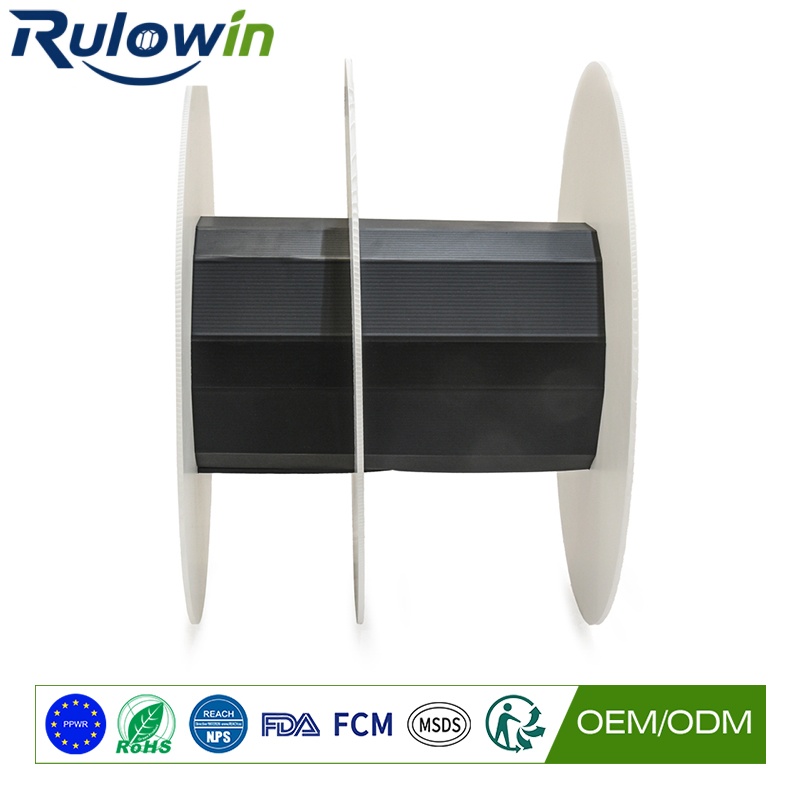
A fiber optic cable reel is a simple object: a cylindrical hub, a flange at each end, and a bore through the middle so it can sit on a spindle and turn. Cable is wound onto the hub between the flanges, and paid off again by letting the reel rotate. Everything about the design follows from those two operations.
What each part is for
The hub sets the smallest radius the cable is ever bent to. That makes it the most important dimension on the reel from the cable’s point of view, and the one most often chosen for the wrong reason. It should come from the cable’s minimum bend radius.
The flanges contain the cable and take the outward pressure the wound cable exerts. That pressure is highest at the inner wraps, which is why flange failures start near the hub – we went through this in why cable reel flanges crack.
The bore locates the reel on the payout stand. If it is loose or out of round, the reel wobbles, and a wobbling reel produces a periodic tension variation that shows up on sensitive cable.
Why plastic replaced wood for a lot of this
Weight, first. A plastic reel carrying the same length is substantially lighter, and on a long haul that is freight. Consistency, second – a moulded reel is the same reel every time, with a bore that is actually round, whereas wooden drums vary one to the next.
Export treatment, third and often decisive. Wood moving across borders needs to be treated and stamped; plastic does not. For anyone shipping through several jurisdictions, that paperwork is worth more than the material price difference. We set out the full comparison in plastic reel versus wooden drum.
Where plastic is the wrong choice
Long-term outdoor storage measured in months, unless the resin is UV-stabilised – polypropylene chalks and embrittles in sun. Very large diameters and very heavy cable, where wood is simply stiffer per unit cost. And applications where the reel will be dragged and dropped in a way that a moulded flange will not forgive.
What to specify when ordering
Cable diameter, length per reel, minimum bend radius, bore size to match your equipment, and whether reels are stored outdoors. Five numbers, and a supplier who asks for them is a supplier who will get it right. We went through the sizing in what flange diameter you need.
What the markings are for
Reels carry printed information: length, cable type, direction of pull, sometimes a batch code. That sounds administrative and it is mostly practical – a crew needs to know what is on a reel before it goes on a truck, and knowing which end to pull from saves a reversal.
If you print on reels, ask for a method that survives. Printed ink on polypropylene abrades quickly and labels lift, for the reasons described in our piece on labelling picking boxes. Moulded-in or embossed markings last, and a printed area that sits below the flange rim survives handling better than one on the flat face.
What we can do
We supply plastic fiber optic cable reels for FTTH and telecom deployment, sized from the cable rather than from a catalogue. Send us the cable specification and target length and we will specify hub, flange and bore – and tell you if wood would serve you better.