
Air in a poultry or livestock house is a difficult filtration environment in a way that is easy to underestimate from outside. It carries dust, it is humid, and it contains ammonia. Each alone is manageable; together they end conventional filter media quickly and change what the specification should be.
What is in the air
Dust from bedding, feed and dried manure, in quantities that are high by any building standard. Moisture from respiration and from the animals themselves, often near saturation. Ammonia from the breakdown of waste, at concentrations that vary with ventilation rate, stocking density and how the house is managed.
Add feathers and, in poultry houses, the fine scale of feather dust that gets everywhere. The dust loading alone would be a lot; with the moisture it becomes a paste that mats onto surfaces.
Why conventional media fails
Metal mesh corrodes. Ammonia and moisture together are aggressive, and galvanised screening in a livestock house has a short life. Rust products then enter the air stream.
Paper media absorbs moisture, loses strength, sags and supports microbial growth. In a house at high humidity it does not last a season.
Polypropylene is unaffected by the moisture, broadly resistant to ammonia at the concentrations found in housing, and does not corrode. It is also washable, which matters because the loading is high enough that replacement intervals would be short.
What to expect in service
Frequent washing – the loading is heavy. Rinsing is usually adequate for dust, and the ammonia does not change that. Check for mechanical damage at each wash, because screens in agricultural buildings get handled roughly and a cracked panel bypasses.
Expect a longer life than any alternative in the same position, and accept that the screen is a service item that will eventually be damaged rather than worn out.
The chemistry behind that is covered separately in ammonia and humidity in livestock ventilation.
Inlet mounting versus fan mounting
Inlet screens protect everything downstream and catch material before it enters the building, which is usually where you want it. They are also exposed to weather and harder to reach across the length of a house.
Fan-mounted screens protect the fan and are easy to reach, which makes washing realistic – and in a livestock house, where washing is frequent, accessibility tends to decide the matter. Many houses end up with both: a coarse grid at the inlet and a washable screen at the fan.
Washing between flocks
The natural rhythm is the flock cycle: screens come down when the house is empty, get washed properly, inspected, and refitted before the next batch arrives. That is a much better interval than any calendar, because it aligns with a time when the house is accessible anyway.
Keep a spare set so the house is never running with an opening uncovered while screens are out. In a building where ventilation is critical to animal welfare, an uncovered opening is not an option.
What the screen does not solve
A screen does not control ammonia concentration; ventilation rate does. Nor does it deal with moisture beyond keeping the air path clear. Where ammonia or humidity are the actual problem – for animal health or for worker exposure – the answer is air change rate and house management, and filtration is a supporting measure at best.
Being clear about this matters, because a screen fitted to solve an air quality problem will not solve it, and the disappointment leads people to conclude the screen is not working when it is doing exactly what it was designed to do.
What we can do
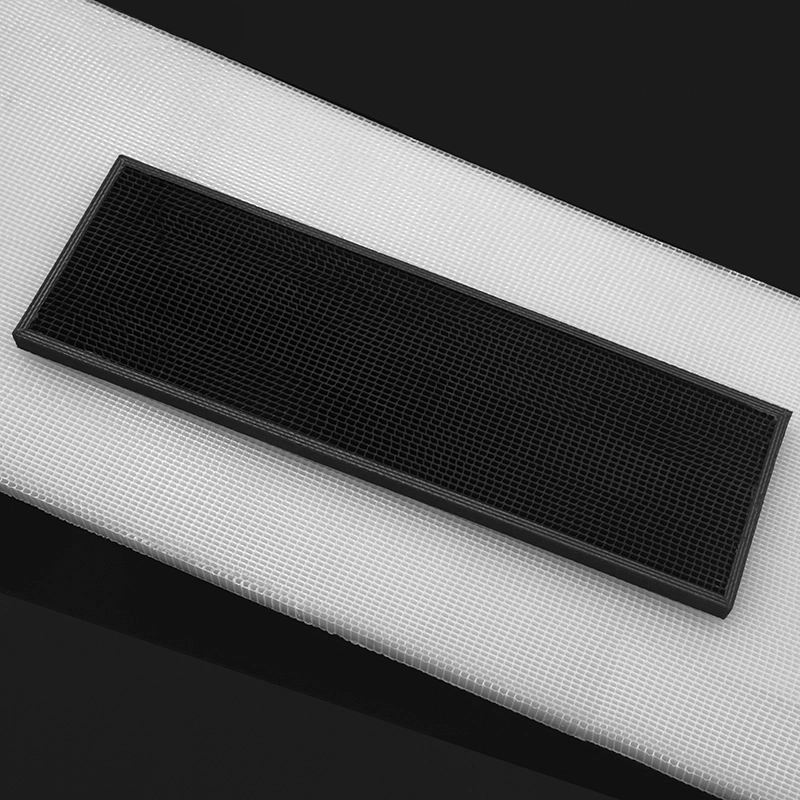
We supply washable PP honeycomb screens for livestock and poultry ventilation, cut to the intake or fan aperture. Tell us the airflow, the opening and the stocking, and we will recommend a gauge and open area that handle the loading without becoming the restriction.