
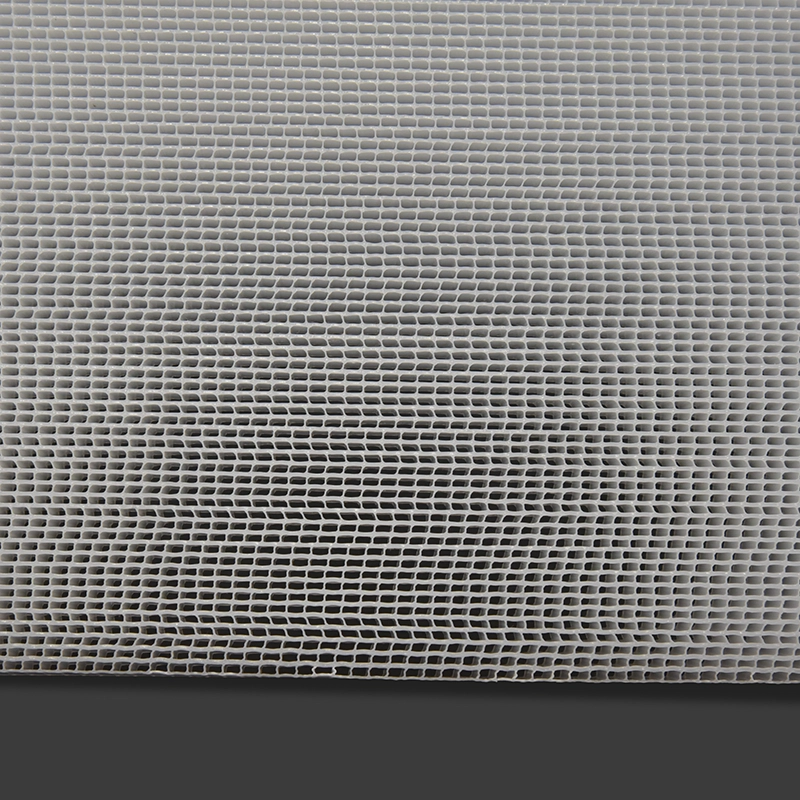
Ask for a filter panel cut to size and the natural assumption is that closer is better. It is not. A panel made exactly to the aperture will bind, and a panel made with visible clearance will bypass. The useful band sits between those, and where it sits depends on how the panel is held.
Why exact size is wrong
An aperture is rarely square and never constant. Frames rack, housings flex, and temperature moves dimensions – a plastic panel in a hot air stream is not the same size it was on the bench. A panel cut to nominal size plus nothing will jam on installation or jam later, and a jammed panel that has been forced will bow and then bypass.
There is also the practical matter of installation. A panel needs a small amount of clearance to go in without being forced, particularly if it is being fitted overhead or into a channel.
Why too much clearance is worse
Clearance is a gap, and a gap passes air. Unlike a compressible disposable filter, a rigid panel does not close its own clearance. A couple of millimetres all round does not sound like much and is enough to matter, because the gap competes with a far more restrictive path through the media.
The band, by retention method
Slide-in channel. Small clearance – enough to slide freely, no more. The channel does the locating and usually provides some sealing.
Face-mounted against a gasket. The panel can be slightly oversize, because it compresses against the gasket rather than seating in a channel. This is the arrangement that tolerates the most variation.
Clipped or spring-held. Depends on what it is clipped against. Where the clip presses the panel onto a flat face, a slightly undersize panel with a sealing flange works well.
What to tell the supplier
State the retention method, not just the dimensions. The same aperture needs a different panel if it is face-mounted with a gasket than if it slides into a channel, and this is the detail most likely to be omitted from an order.
Temperature and storage
Polypropylene moves with temperature more than metal does, and a panel that fits on a cold morning can bind on a hot afternoon in the same housing. Where a panel sits in a warm air stream, allow for it – a little more clearance than feels necessary on the bench.
Storage causes more problems than temperature. Panels stacked flat are fine. Panels leaned at an angle, or stacked under something heavy, take a set and arrive curved. A curved panel measures correctly and still bypasses, which is the frustrating failure – the dimensions check out and the performance does not.
If it still does not fit
Do not force it. A panel forced into a tight opening bows, bows permanently once warm, and then bypasses along the bow – and it will be difficult to remove next time. Trim it if there is material to spare, or send it back and adjust the dimensions. Trimming a honeycomb panel is easy; un-bowing one is not.
What we can do
We supply cut-to-size honeycomb filter panels and will ask how the panel is retained before recommending a tolerance. Tell us the aperture and the fixing method and we will specify the size accordingly – and confirm it with you before cutting.