
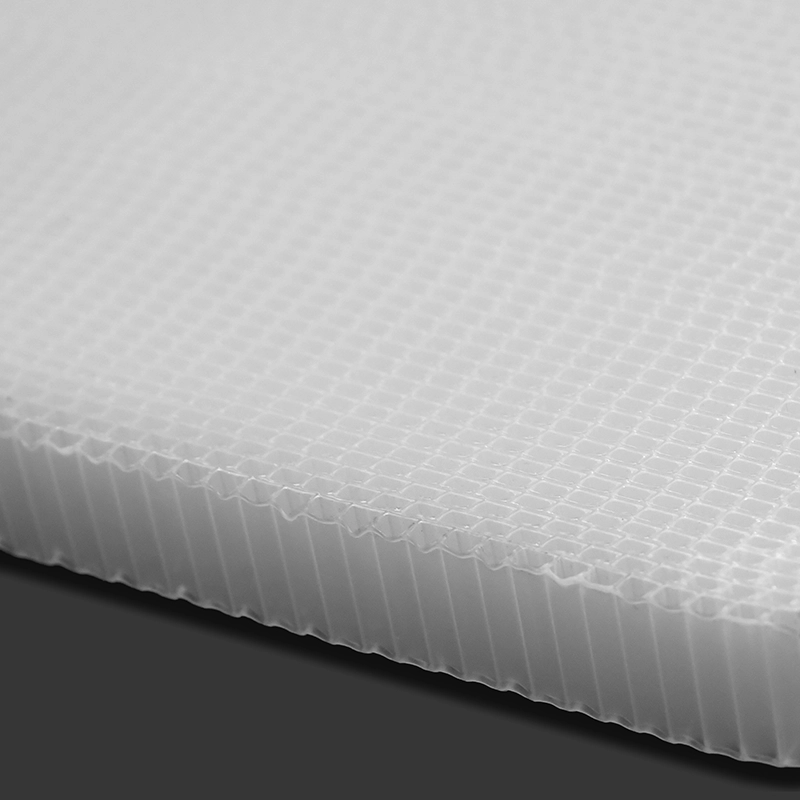
A cut-to-size filter panel removes the need to adapt a housing around a standard size, which is the main reason to order one. It also moves all the measurement risk to the customer. Most panels that arrive and do not fit were measured from the filter being replaced rather than from the opening it sits in.
Measure the aperture
The clear opening, not the old panel. Disposable filters are routinely smaller than the aperture they sit in, relying on their own compression to seal. Copy those dimensions and the new rigid panel will have a gap around it, and air will take the gap.
Take width and height at both ends and in the middle if you can. Openings are frequently not square, and a panel made to the average will bind at one corner and gap at the other.
Measure the depth
The dimension people forget. A rigid panel is thicker than the mesh or cardboard-bound panel it replaces, and if what is behind the opening is close – a coil face, a fan inlet, a second stage – the extra thickness may not fit at all.
Check the depth available at the tightest point, not the nominal frame depth. Brackets, fixings and the curve of a housing all eat into it.
Note how it is retained
How does the panel stay in place? A slide-in channel, clips, a hinged frame, or just the grille pressing on it. Each implies a different edge treatment, and a panel with a square edge may not enter a channel designed for a tapered one. This is worth a photograph more than a description – a picture of the opening with the old filter out settles most questions.
Allow for the seal
A rigid panel cannot compress to seal. Decide how the seal happens: a face gasket, a sealing flange, or a close fit against a flat frame face. If the frame face is uneven or bowed, say so – the panel can be made slightly oversize with a compressible edge, which solves a problem that is otherwise unsolvable.
What to do with the dimensions once you have them is covered in retrofitting panels into existing frames.
Send a photograph
A picture of the empty opening, taken straight on and with something for scale, settles more questions than a page of dimensions. It shows whether the frame has racked, whether a bracket intrudes, whether the opening is actually rectangular, and how the old filter was retained – all of which are hard to describe and easy to see.
Take two: one of the empty opening and one showing it in context, so the housing and any obstruction are visible. Most suppliers will confirm dimensions against these before cutting, which is worth the extra minute.
Common measuring mistakes
Measuring the old filter rather than the aperture, which is the one that causes most panels to arrive with a gap. Measuring once and assuming square, when openings are frequently out by several millimetres corner to corner. Forgetting the depth. And measuring a replacement unit rather than the installed one, where a plant has more than one model.
What we can do
We supply cut-to-size honeycomb filter panels made to your measurements. Send us the aperture, the available depth at its tightest point and a photograph of the empty opening, and we will confirm the dimensions before cutting – or tell you what else we need.