
The comparison between washable and disposable air filtration is usually argued on purchase price, which is the least important number in it. What decides it is loading rate, whether anyone will do the washing, and whether the material captured can be washed out at all.
What disposables do better
They are always replaced with a known, clean, undamaged medium. There is no inspection skill required, no drying, no storage of dirty panels, no risk of a damaged panel going back in. Where filtration performance is critical and audited, that certainty has real value.
Disposables also reach fine efficiencies that no washable coarse screen approaches. For the fine stage of any system, disposable media is normally the correct answer and will remain so.
What washables do better
They remove a recurring purchase and the procurement attached to it. They keep resistance lower as they load, because an open structure does not fill the way a mat does. They are unaffected by moisture, so they work where paper media fails – humid air, coastal plant, evaporative coolers, anywhere the filter gets wet in service.
And they generate less waste. For sites reporting on consumable waste, replacing a coarse stage that changes monthly with one that is washed makes a visible difference to the numbers.
Where the argument is decided
Loading rate. High loading means frequent replacement, which is where washable wins. Low loading means infrequent replacement and a washable panel may never pay for itself.
Access. If reaching the filter takes twenty minutes and tools, the labour cost of washing outweighs the saving. If it is a clip-off grille, it does not.
Contaminant. Dry dust washes out. Oily aerosol largely does not. This one overrides the others: if it will not wash clean, the comparison is over before it starts.
A note on the mixed answer
Most systems end up with both. A washable coarse stage in front, taking the mass and the moisture, and a disposable fine stage behind it, doing the work the coarse stage cannot. That arrangement usually costs less than either approach applied to the whole problem, and it is what we recommend more often than not.
The cases where washable media is simply the wrong answer are listed in when a washable air filter is the wrong choice.
Doing the comparison yourself
Four numbers, and you do not need them to be precise. How often the coarse stage is currently changed. What each change costs, including the labour to do it. How many hours the plant runs. And whether anyone will realistically do the washing.
With those, the comparison is straightforward. If a stage is changed monthly and changes are expensive in both consumable and labour, washable wins comfortably. If it is changed twice a year and nobody owns the maintenance task, disposable wins, and it is not close.
The one that people leave out is the last. A washable screen with no one to wash it is worse than a disposable changed late, because it looks permanent and nobody schedules it. Be honest about that before buying anything.
Where the mixed answer applies
Most real systems end up with a washable coarse stage and a disposable fine one, and that is usually the correct outcome rather than a compromise. The coarse stage handles the mass and the moisture; the fine stage handles what the coarse stage cannot. Each is doing the job it is best at.
What we can do
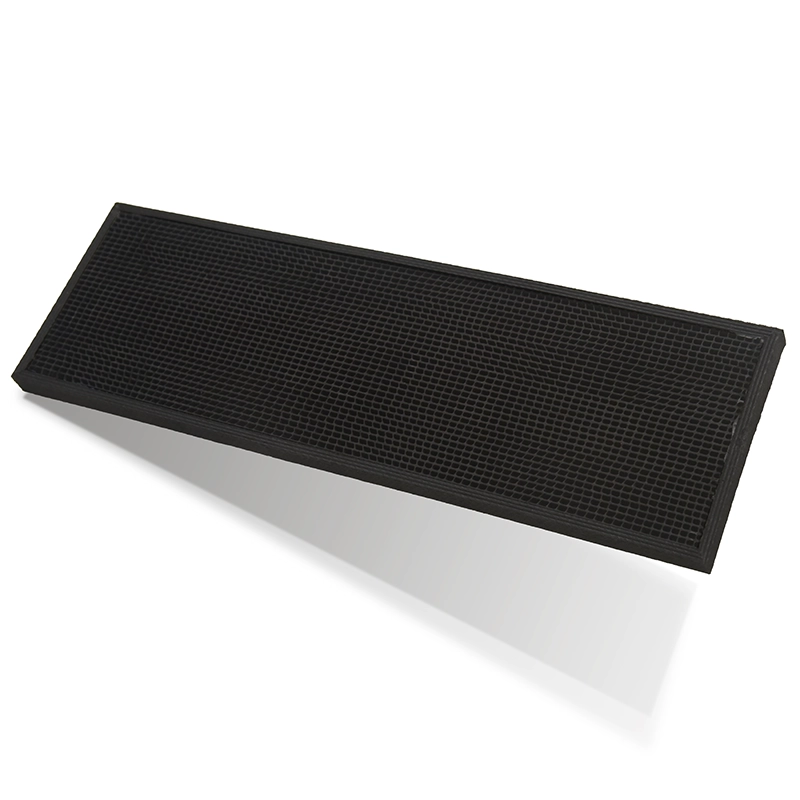
We supply washable reusable PP honeycomb filter screens cut to size, and we will tell you plainly when a disposable is the better buy for the stage you are asking about. Send us the loading, the access and the airflow and we will work the comparison with you.