
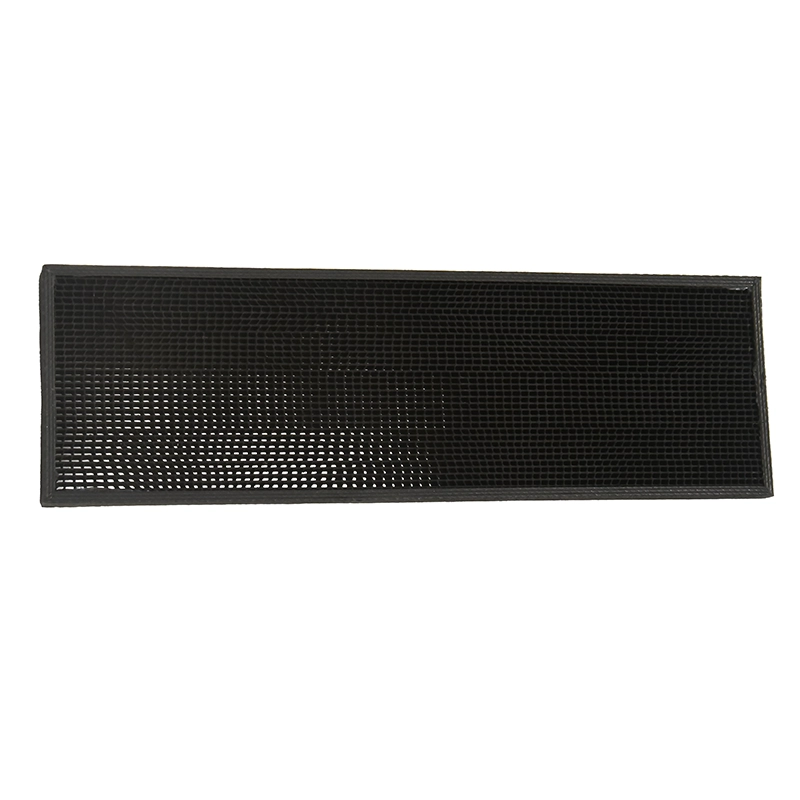
People ask how many washes a polypropylene filter screen survives, expecting a number, and the honest answer is that the material is rarely what ends it. Polypropylene does not absorb water, does not rust, and is unaffected by the mild detergents used in filter washing. Chemically it will tolerate a great many cycles. What ends a screen is mechanical, and it is nearly always handling.
What actually ends a screen
Three things, in rough order of frequency. Physical damage – a cracked cell wall, a split corner, a bent panel that no longer seats. Deformation from heat – washing in water that is too hot, or drying against a heat source, will soften and distort a thermoplastic panel. And loading that has worked into the structure and will not come out, which is a chemistry problem after all, but one of the contaminant rather than the material.
None of these are counted in wash cycles. A screen handled carefully in lukewarm water and dried flat will outlast one dragged out of a frame and hosed at close range many times over, with identical wash counts.
Wash method matters more than wash count
Lukewarm water and mild detergent, rinsed from the clean side outward. A soft brush for stubborn material. No solvents unless the contaminant genuinely requires one – and check compatibility first, because a solvent that attacks polypropylene will do it quickly.
Avoid high-pressure jets held close to the face. They are effective at removing loading and effective at deforming cell walls on a light-gauge panel, and the deformation is not always visible until the panel stops seating properly.
Inspection is what makes the count meaningful
A screen that is washed but never inspected fails in service rather than on a schedule. The inspection is quick: hold it to a light and look for cracked or missing cell walls, check the corners, and check that it still sits flat in its frame. A panel that has gone wavy will bypass, and bypass is worse than a dirty panel.
Keeping a spares set means the inspection can actually result in a panel being retired rather than refitted because nothing else is available. That is the difference between a wash programme that works and one that is cosmetic.
What the count looks like in practice
In a clean commercial or light industrial application with sensible handling, years rather than dozens. In a kitchen or a workshop with aggressive washing, considerably less. It is worth tracking: mark the panel with an installation date and you will learn your own interval, which is more useful than any figure from a supplier.
When to retire one
Three criteria, and any one of them is sufficient. Cracked or missing cell walls – hold the panel to a light and look through it. A panel that no longer sits flat, which means it will bypass whatever its condition otherwise. And loading that survives a proper wash, which means the contaminant has won.
Warping deserves a specific mention because it is the easiest to miss. A screen that has been dried against a heat source or stored leaning for months may look fine and still rock on a flat surface. That rocking becomes a gap at the frame, and a gap passes unfiltered air.
Keeping a small spares holding is what lets these criteria be applied rather than argued with. Without a spare, the retirement decision always loses to the fact that the plant has to run.
What we can do
We supply washable PP honeycomb filter screens in a range of thicknesses, and will recommend a gauge that survives the handling a panel will actually get. Tell us how and how often it will be washed and we will specify accordingly – heavier where the handling is rough, lighter where it is careful.