
Pressure drop is the only honest measure of how loaded a filter is. Appearance misleads – a screen can look grey and still be passing air freely, or look presentable and be substantially blocked in the depth. Two readings a few minutes apart, taken once and written down, settle it for as long as the installation exists.
The two numbers
Clean drop. Taken on the day the screen goes in, at normal operating airflow. Write it on the frame with a marker or into the maintenance log. Everything later is a comparison against this, and without it no subsequent reading means anything.
Service drop. The differential at which the screen gets washed. This is a decision, not a measurement, and the sensible range depends on how much pressure margin the system has. A common approach is to service at roughly double the clean drop, which for a low-resistance coarse screen means it stays far from becoming the restriction.
What a rising number tells you
A gradual rise is normal loading. A sudden jump usually means something changed: a door left open, a nearby construction start, a seasonal pollen load, or a damaged panel collapsing internally. A rise that continues after washing means the loading is not coming out – oily aerosol is the usual cause, and once it is in the structure the panel is finished.
A reading that stays flat while airflow falls is the one worth investigating: it usually means air is bypassing the screen around its edges rather than passing through it.
Taking the reading
Measure across the screen, not across the whole plant – upstream and downstream taps close to the panel. Duct position matters: readings taken immediately after a bend or a damper are unreliable. Straight duct, a few duct diameters either side, gives a usable number.
Read at the same airflow each time. A reading taken with the fan on high is not comparable with one taken on low, and this is the single most common reason people conclude the method does not work.
Mistakes that make readings useless
Comparing readings taken at different airflows is the most common. A reading at full design flow and one taken with a variable-speed fan at sixty percent are not comparable, and the difference will be larger than the effect of loading.
Measuring in the wrong place is the second. Immediately after a bend, a damper or a transition, the static pressure is not representative. Straight duct, a few diameters either side of the panel, is what you want.
And not recording which side is upstream. It sounds obvious; on a reversible or poorly labelled installation it is not, and a negative reading gets recorded as a positive one.
What to write down
Date, airflow setting, the reading, and what was done about it. Four columns. After a year you have something more valuable than any rule of thumb: the loading pattern of this particular plant, including the season when it doubles and the month when nothing happens.
What we can do
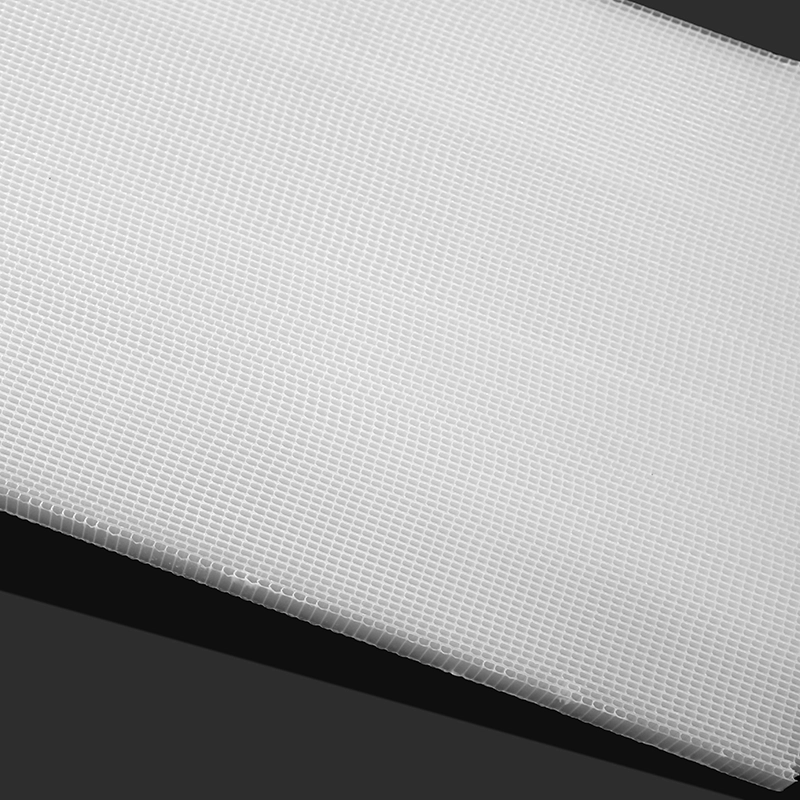
We supply high airflow washable honeycomb filters and quote the clean pressure drop at your face velocity, so you have the baseline before the panel arrives. Tell us the airflow and face area and we will give you the number – and a service point to set against it.