
Ask a facilities team why filters are changed every three months and the answer is usually that it has always been three months. The interval is inherited from a commissioning document or a contractor’s standard schedule, and it bears no relation to the actual loading. Both over-servicing and under-servicing are common, and neither is visible without data.
Why calendar intervals drift wrong
Loading varies by season, by occupancy and by what is happening around the building. A site next to a road under construction, or one with a loading bay door that stands open, will load several times faster than the same plant in a quiet urban office. Construction nearby can change the loading of a building for a year and nothing in the schedule reflects it.
The same applies in reverse. A building that is partly vacant for months is being serviced for occupancy it does not have.
Setting the interval from pressure
The clean way is to define the change-out pressure: the differential at which the stage is serviced. Commission the plant with a clean reading, then set the service point at a defined rise above it. The interval then follows the loading automatically – shorter when the site is dusty, longer when it is not.
This needs two things that are often missing: a way to read the differential, and someone who reads it. Many air handling units have gauge ports fitted and never used. Where there is no instrumentation, a low-cost differential gauge repays itself quickly on a large plant.
Where washable changes the task
On the coarse stage, a washable panel removes the consumable and replaces it with labour. That changes what the interval means: there is no longer a cost penalty for servicing early, only a labour one, and the panel comes back to a known clean condition rather than a nominal new one.
It also removes the risk that a service visit is skipped for budget reasons. A disposable stage that is not changed simply stays in place and loads further; a washable one that is not washed does the same, but the remedy costs nothing but time.
Three things that change the loading overnight
Construction or refurbishment anywhere near the building. Drilling and cutting generate coarse dust in volumes that overwhelm any schedule set for normal occupancy, and it lasts for the length of the works. A nearby road scheme does the same from outside.
A change in how the building is used – a floor converted to a workshop, a door propped open for deliveries, a process moved indoors. And seasonal pollen, which is short, intense and predictable once you have seen it in the data.
None of these appear in a schedule. All of them show up immediately in a pressure reading, which is the argument for setting intervals from pressure rather than from dates.
Reading a gauge versus guessing
A differential gauge costs little and removes the argument entirely. Where plant has gauge ports fitted and unused – which is common – connecting a gauge is a small job. Where there are no ports, a handheld manometer used at each service visit gives the same information with a little more effort.
The alternative is looking at the filter and deciding, which is what most sites do, and which is why intervals are either too short or too long.
What we can do
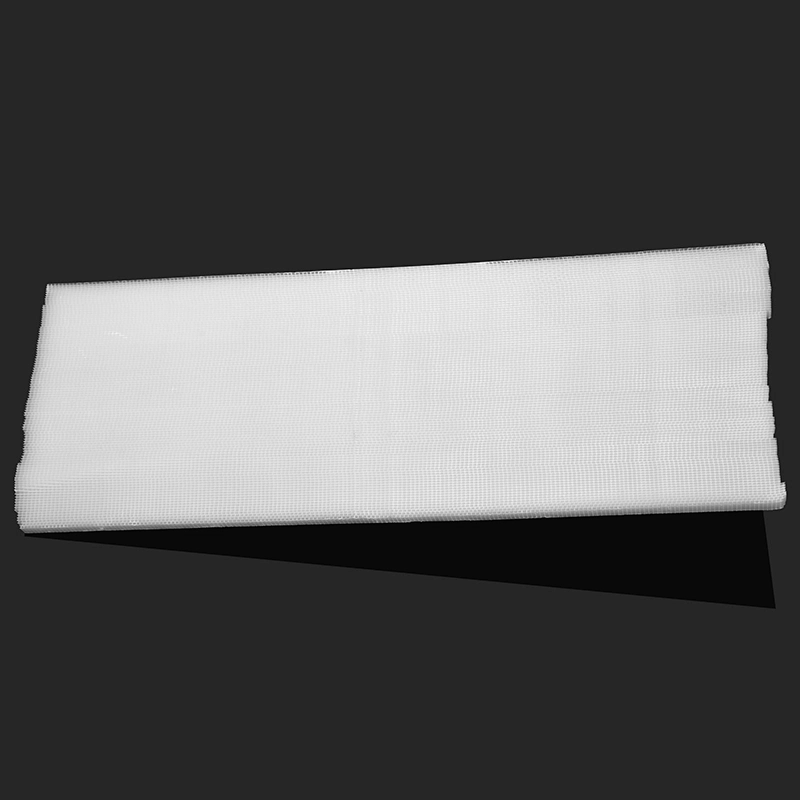
We supply reusable PP honeycomb panels for commercial HVAC plant cut to your frame dimensions, and we will quote the clean pressure drop so you can set a service point from a number rather than a habit. Tell us the airflow and face area and we will send figures you can put on the schedule.