
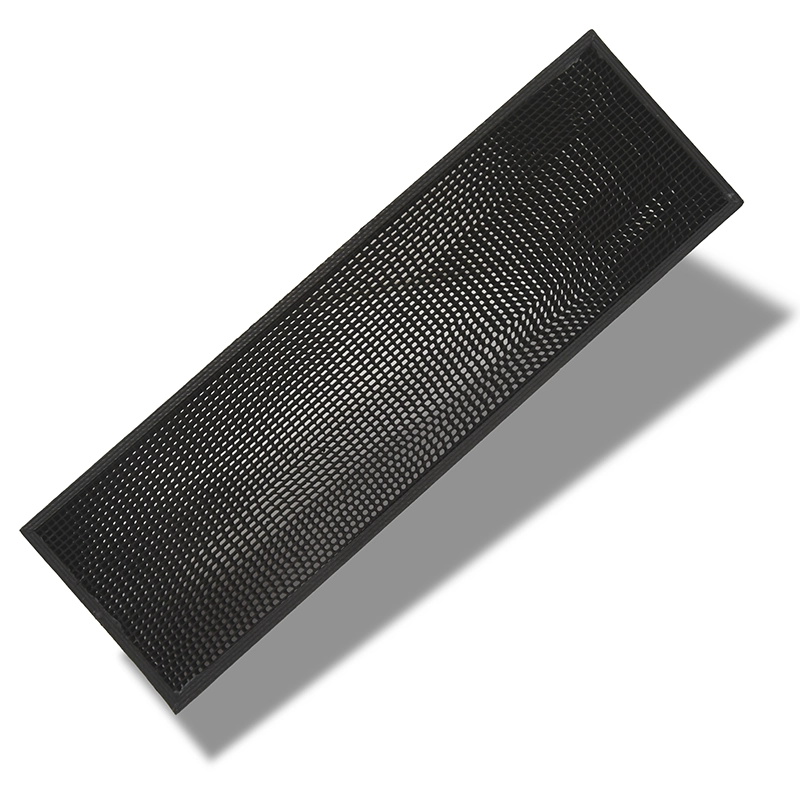
Cleaning is judged by appearance, and appearance is a poor indicator. A screen with a thin film on the wire, or with material wedged in the apertures, can look acceptable and be restricting flow measurably.
Why appearance misleads
Three reasons. A thin adsorptive film is transparent and invisible unless you know to look for it. Material lodged inside apertures is hidden by the surrounding wire. And the eye adapts – a screen that has been getting progressively dirtier over months looks normal because there is no clean reference next to it.
The result is that cleaning is judged to have worked when it has partly worked, and the interval shortens cycle by cycle until someone replaces the screen.
The reliable test: differential against baseline
Record the differential pressure across the screen when it is new and clean, at a known flow and temperature. After cleaning, measure it again under the same conditions.
That comparison is the whole method. If the cleaned screen returns to something close to its baseline, cleaning works. If it returns to a noticeably higher figure, the residual is permanent and the screen is on its way out.
The flow and temperature conditions matter. Differential depends on both, so the readings must be comparable. Take them at a defined operating point, not at whatever the plant happened to be doing.
What to compare against
Set a threshold as a fraction of the new-screen baseline – for example, replace the screen when a cleaned screen no longer returns to within a defined margin of its original reading. The exact figure depends on your process and on what flow margin you have.
The important thing is having a figure rather than a feeling. Without a baseline, “it looks clean enough” is the only available judgement.
Other methods
- Weighing. Weigh the screen clean, dry and new. Weigh it again after cleaning and drying. The difference is the residual deposit. Simple and quantitative, though it needs a scale that resolves small masses and a consistent drying method.
- Backlighting. Hold the screen against a strong light. Blocked apertures show as dark spots. Crude but fast, and useful for a routine check.
- Air or water flow test on the bench. Measure the time to pass a known volume through a known area of screen. Repeatable if the method is standardised.
- Dimensional check. If the screen has swelled, the apertures have changed, and no amount of cleaning will restore it. Measure the aperture on a sample.
Distinguishing the two kinds of residue
Residue that reduces open area mechanically is removable if the cleaning method is right. Residue that has chemically bonded to the surface, or that has swollen into the material, is not.
The practical test: if a more aggressive clean does not improve the differential, the deposit is no longer on the surface. At that point the screen is finished and the correct action is replacement, not more cleaning.
Recording it
The record that matters is short: screen ID, date, clean differential, and whether it returned to baseline. After a dozen cycles you will know your cleaning method’s real performance and the realistic life of a screen in that duty.
That data is also what makes a replacement decision defensible rather than a judgement call.
What we can do
We supply PP filter screens to a stated open area, so a new screen’s differential is predictable and a replacement batch can be compared with the last one. If your clean differential has drifted from delivery to delivery, that is worth investigating – it usually means the mesh specification has changed.