
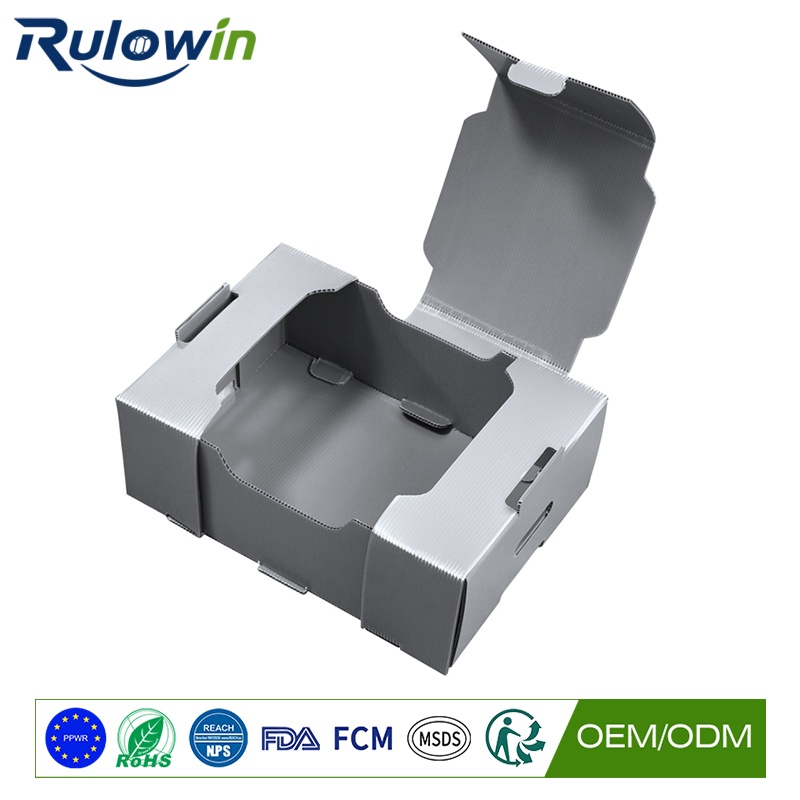
A reusable produce crate circulates. It goes to a field, to a pack house, to a distribution centre and back. Unlike a single-use carton it is a shared surface that keeps coming back, which is exactly why washing is not optional and why it is the part of a reusable programme most often under-resourced.
What the wash has to achieve
Two distinct objectives, and they need different things. Physical removal of soil, plant debris and product residue – this is what detergent and mechanical action do. Microbial reduction on the surfaces that remain – this is what sanitiser and contact time do.
A wash that removes visible soil but applies no sanitiser leaves a clean-looking crate with a microbial load. A wash that applies sanitiser to a soiled crate wastes the sanitiser, because organic matter consumes it. The order matters: clean first, then sanitise.
The three variables
Temperature. Warm water cleans better and is harder on the crate. Most reusable PP crates are comfortable in a wash regime in the region of 50 to 60 C, and above that the material ages faster – the heat-affected areas around welds first.
Chemistry. Detergent concentration and sanitiser type. Chlorinated sanitisers are effective and attack PP progressively; if you use them, higher temperature makes that worse.
Contact time. The variable most often skipped. A crate that passes through a spray tunnel in fifteen seconds is not getting the same treatment as one that dwells. If your microbial results are marginal, contact time is the first thing to check.
What matters as much as the wash
Drying. A crate put away damp grows biofilm in the interval before it is used again. This is the most common cause of a crate that tests well after washing and poorly in service.
Crate design. A crate with drainage at the low point, no water traps, and cleanable corners is fundamentally easier to get clean. Deep recesses, sharp internal corners and unsealed flutes are all places the wash cannot reach and dirt can.
Water quality. A recirculating wash tank without filtration returns the soil it removed to the next crate. A filter on the tank is cheap and often more effective than increasing detergent.
What to record
For any food-safety system you need to be able to show what was done. The record that matters is simple: date, batch of crates, wash conditions (temperature, chemistry, contact time), and the result of any verification. Microbial swabbing on a schedule, and a visual check on every crate.
Without a record you cannot demonstrate that the process works, and without verification samples you do not know whether it does.
What to do with a crate that will not come clean
Retire it. A crate that retains soil after a proper wash has damage that holds it – a crack, a lifted weld, a scored area – and no amount of washing will fix it. Keeping it in circulation spreads the problem into every load it touches.
Having a written retirement rule makes this easy to enforce. Something like: any crate with a split, an open edge, or persistent staining after washing is removed from service.
Where the crate itself helps
Design decisions made at purchase determine how hard the wash is for the next several years. Sealed edges, drainage paths, radiused internal corners, no absorbent materials, and identification that survives – these all reduce the cost and difficulty of cleaning for the life of the crate.
We would rather discuss the wash regime when specifying a produce box than after the first failed swab, because it changes what we would build.