
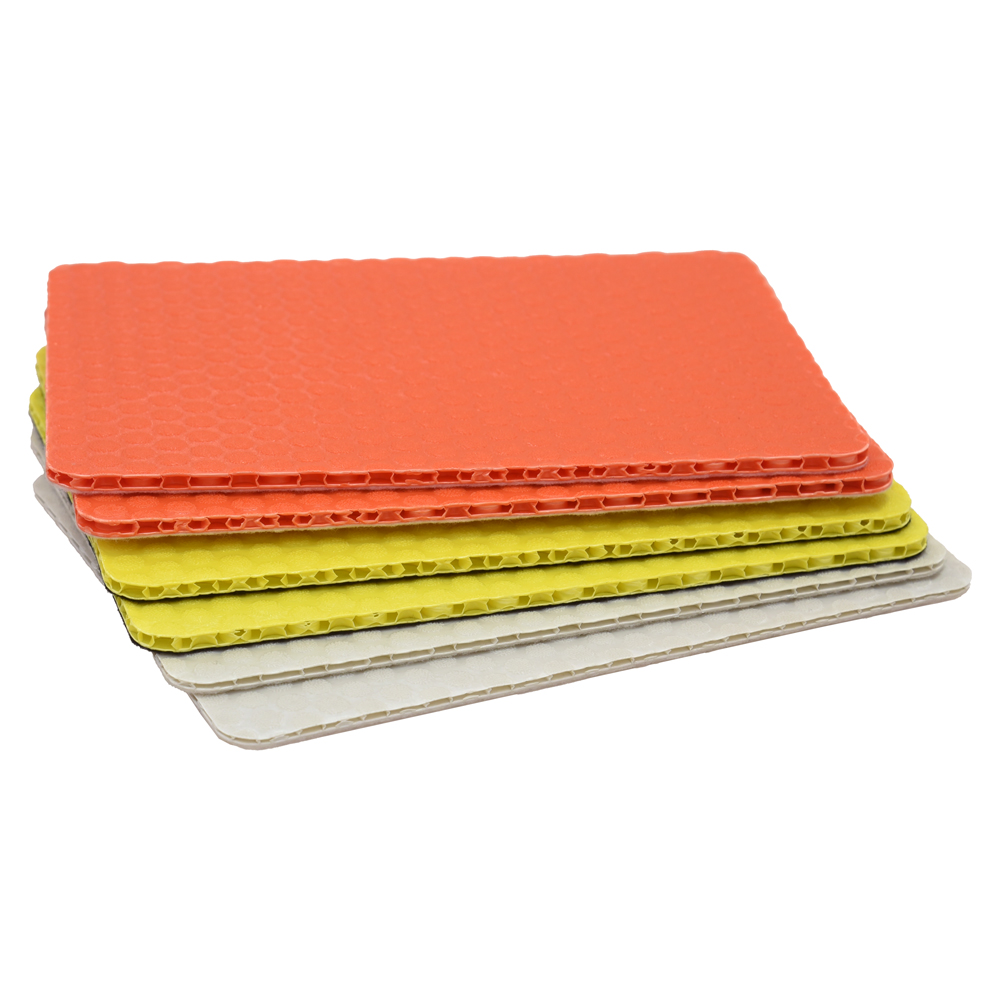
Tolerances are where a straightforward panel fabrication turns into a difficult one. The drawings arrive with the limits that suit machined metal, the material cannot hold them, and either the price goes up or the parts get rejected for a reason that is not really a defect.
Why PP is different
Polypropylene moves more with temperature than metals do, and board products carry a manufacturing tolerance on thickness before anyone starts cutting them. A panel quoted as 10 mm may arrive at anything in a small band around that figure, and the band is not a quality problem – it is how extruded and laminated board is made.
On top of that, cutting releases internal stress, so a part can move slightly after machining. In thin sections with large cut-outs, this is visible.
The tolerances that are actually achievable
As a rough shape rather than a promise: cut length and width in the region of a millimetre on a well-supported saw or router; hole positions somewhat looser; thickness governed by the board tolerance rather than by machining; and flatness considerably looser than a metal plate of the same size.
Exact figures depend on the board, the process and the size of the part, which is why we would rather quote a tolerance for a specific fabrication than publish a table that will be wrong for yours.
What makes it worse
- Thin skins. A light board is more affected by stress release and by handling than a heavy one.
- Large parts. Tolerance scales with size, and a 2 m panel is a different proposition from a 300 mm one.
- Big cut-outs. Removing material lets the surrounding area move.
- Temperature. A part measured in a cold workshop and installed in a warm one will not measure the same.
- Measuring after machining rather than after settling. Parts that move tend to move within hours, not weeks.
How to specify sensibly
Tolerance only what matters. Identify the dimensions that actually govern fit and function, and leave the rest general. A drawing with every dimension tightly toleranced is expensive to make and no better than one that is selective.
Design for the material. Clearances that absorb the tolerance range are cheaper than a drawing that demands a tolerance the material cannot hold. If a panel has to fit a slot, give the slot a generous allowance and locate the panel on features that are more stable.
Say what the part has to do. “Fits the housing” is often more useful than a number, because it lets us propose how to achieve the fit.
Allow for the board tolerance in the assembly. If three panels stack into a fixed gap, the gap has to absorb three thickness tolerances rather than one.
Inspecting a fabrication
Measure at a controlled temperature, after the part has been allowed to settle, and with a method that does not itself deform the part. Calipers squeezed onto a honeycomb edge will crush it and give a reading that means nothing.
Where a part is out of tolerance, check whether it actually affects function before rejecting it. In our experience a good proportion of rejected panel fabrications would have worked perfectly.
What we can do
We fabricate PP honeycomb panels to drawings and will tell you which of your tolerances are achievable and which are not, before we quote rather than after. If a dimension is critical, tell us why – there is often a way to achieve the function without fighting the material.