
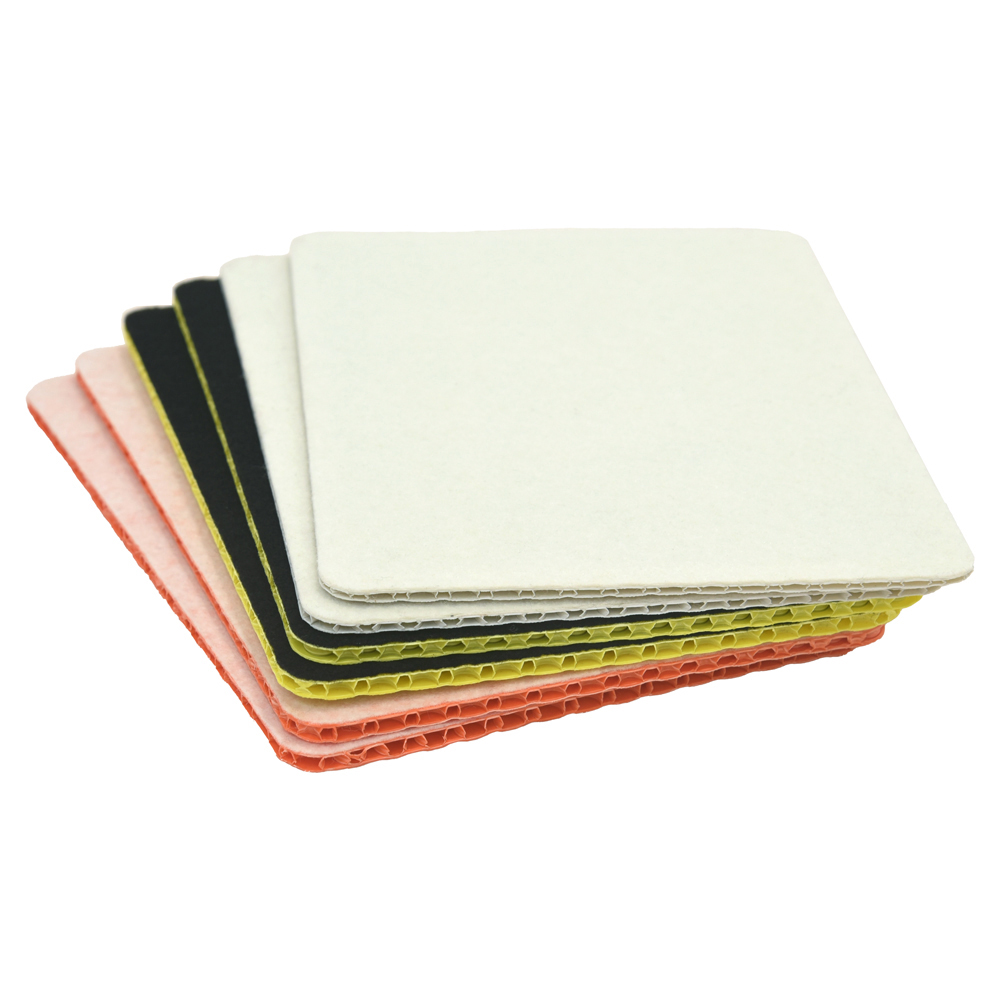
Polypropylene behaves unusually well in the cold compared with many plastics – it does not shatter at freezer temperatures the way polystyrene or some grades of PVC do. That is why PP crates and panels are common in cold stores. It is not, however, unaffected, and the changes matter for handling and for impact.
What cold does to the material
As temperature falls, PP stiffens. Stiffness sounds like a benefit and partly is: a panel that was marginal in bending at 20 C will be stiffer at -25 C.
The cost is on the other side – impact resistance. The same stiffness that helps under a steady load makes the material less able to absorb a sudden blow. A panel that would deform and recover at room temperature can crack under the same impact when cold. This is the change that catches people out, because it does not show up until something is dropped or hit.
Where it shows up in practice
- Handling damage. Panels knocked against racking or dropped onto a dock floor in a cold store crack where they would have survived in summer.
- Fork and pallet-truck contact. The most common source of cold-weather breakage.
- Fastenings. Screws and rivets concentrate stress, and a cold panel tolerates that concentration less well.
- Edges and corners. Already the weakest part of any panel, and the first place a crack starts.
- Thermal cycling. Moving between a warm dock and a cold store works the material, especially where two different materials are joined.
What helps
Rounded corners and protected edges. Impact damage starts at a corner or an edge, and softening that geometry removes most of the trigger.
Thicker skins. More material at the face absorbs more impact energy before it reaches a crack threshold.
Fewer stress concentrators. Holes, sharp internal corners and tight fastenings all start cracks. Where they are unavoidable, radius them.
Avoiding metal-to-PP joints in cycled conditions. Different expansion rates work the joint, and in the cold the PP side is less forgiving.
Allowing the panel to acclimatise where it is going to be loaded or installed cold. A panel that has been in a warm vehicle and is immediately put under load behaves differently from one that has stabilised.
What does not change much
Chemical resistance, water absorption and dimensional stability are broadly unaffected by cold. The material does not become a different material – it becomes a stiffer, less forgiving version of itself. That is a manageable difference as long as the design and the handling practice reflect it.
Specifying for cold service
Tell us the service temperature range, including the coldest handling condition rather than the average storage temperature. Tell us what impacts the panel might take – a fork tine, a dropped tote, a knocked corner – because that is the actual design case.
If your panel is failing in a cold store and the same design worked in ambient service, the answer is usually edge protection and thicker skins rather than a different material.
What we can do
We supply PP honeycomb panels built for cold-store and frozen handling, with edge treatment and skin gauges matched to the impact case. Tell us the coldest condition the panel will see and how it gets handled there, and we will build for that rather than for the temperature on the thermometer.