
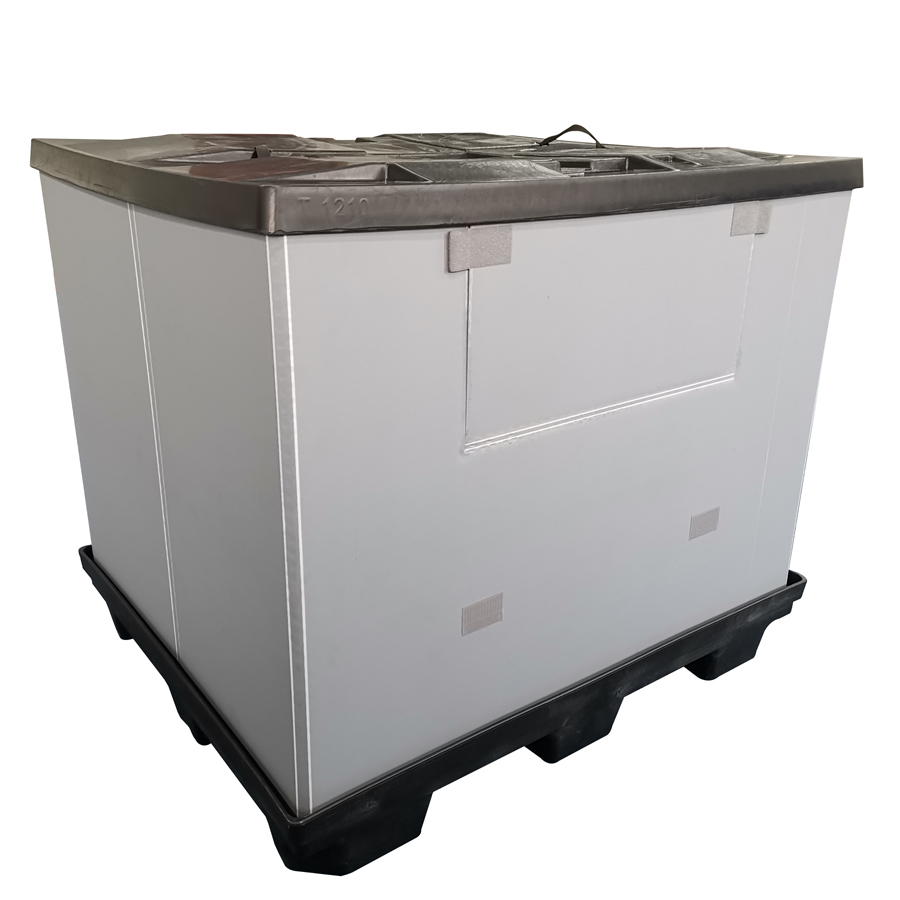
The argument for a pallet sleeve box over a rigid container is usually made on the return journey: the sleeve collapses, so the empty volume is a fraction of the loaded volume. That argument is sound, and it depends entirely on a number that is rarely quoted – the collapsed ratio.
What the ratio is
Collapsed height divided by built height. A sleeve that is 800 mm built and 160 mm collapsed has a ratio of one to five. That is a good figure. Ratios of one to three are common and materially worse, and the difference shows up on every empty leg.
Why it varies
- Fold geometry. How the sleeve folds determines how many wall thicknesses end up stacked on top of each other at the fold.
- Wall thickness. Thicker walls take up more space folded.
- Whether the corners fold or the walls fold flat against each other.
- Whether the base and lid nest or stack solidly, because they travel too.
Do the arithmetic on your own loop
Work out how many collapsed units fit on a pallet or in a vehicle, compare it with how many built ones would, and multiply by your return cost. Then compare that with the difference in purchase price against a rigid container. That is the whole business case, and it takes about ten minutes.
The two things people forget: the base and lid also have to come back, and they may not collapse at all. And empty volume is often not the binding constraint – weight is, or the number of pallet spaces available on the returning vehicle.
When the return leg is free
If your own vehicle delivers and comes back anyway, the marginal cost of carrying empties may be close to zero, and the collapsed ratio matters much less. In that case buy the sleeve that performs best and stop optimising for the return.
This is a real situation and it is worth checking before spending money on a cleverer fold. A lot of effort goes into optimising a cost that is not being incurred.
When it is decisive
Where empties are shipped back by a third party, where the return is a long distance, or where storage space for empties is tight. In those cases a better ratio is worth real money every cycle, and it is worth paying for.
Other things to ask about the fold
- How many times does it fold before the hinge fails? Ask for a cycle figure and how it was tested.
- How long does it take to fold and unfold? Labour is a real cost and a fiddly fold gets skipped.
- Can one person do it? Some designs need two.
- Does it fold cleanly when dirty? On site it will be dirty.
How many times will it actually fold
A fold cycle figure is only meaningful alongside how it was tested. Folded by hand in a warm workshop, most designs last a long time. Folded by someone in a hurry on a cold loading bay, the same design can fail far sooner.
The failure is usually at the hinge – the material work-hardens and cracks along the fold line. It is progressive and visible well before the sleeve fails, which is useful: a sleeve with a cracked hinge can be retired before it fails in service.
If your cycle count is high, it is worth asking for a hinge design intended for it rather than a standard fold. It is a small cost and a large difference in service life.
What we supply
Our pallet sleeve boxes fold to a compact ratio and we quote the figure rather than describing it as “compact”. Tell us what your return leg costs and we will tell you whether the ratio is worth optimising, or whether you should be buying on performance instead.