
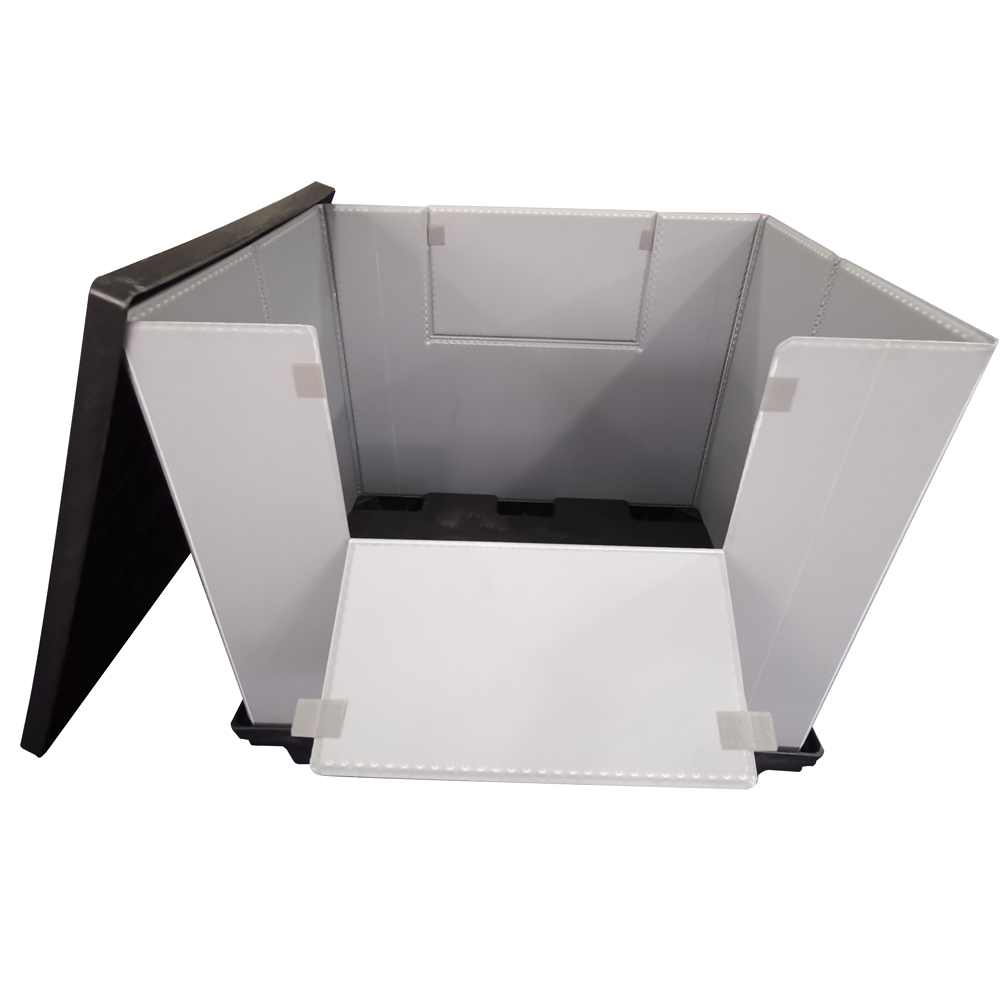
Pallet sleeve boxes are usually sized from the product: how much needs to go in one box. Height then gets rounded to a convenient figure. The result is frequently a box that wastes usable height in every trailer and container it travels in.
Why height is the expensive dimension
Freight is charged by the vehicle. Trailers and containers have fixed internal dimensions, and what matters is how many layers of palletised load you can fit vertically. If your loaded pallet is 50 mm too tall to fit two layers where one layer leaves a large void, you are paying for a lot of air on every journey.
The usable height, not the nominal height
Start from the internal height of the vehicle, subtract the pallet height, subtract any clearance needed for loading, and work out what loaded height divides into it. That number is rarely round, and it is the one to design to.
Then check it against the door opening, which for some containers is lower than the internal height. This is a classic error: a stack that fits the box and will not go through the door.
Where sleeve height actually comes from
A sleeve system has a base, a sleeve, and a lid. The sleeve height is the variable part, and it determines the internal clearance. Two constraints:
- The product height, plus any dunnage or layer pads inside – the sleeve has to be taller than the load
- The stack height when loaded and stacked – the sleeve, lid and base together have to fit the available height
Design to the second one first. If the sleeve is slightly taller than the product needs, that is usually fine and often useful. If it is slightly taller than the freight allows, it is expensive forever.
Partial layers are the hidden cost
Sometimes the arithmetic means a pallet is just too tall to stack two high, and the answer is not a shorter sleeve but a decision: either accept one layer with a lot of empty space above, or change the footprint so the product goes in a shorter, wider box. The second option often gets overlooked because the footprint is seen as fixed.
Collapsed height matters on the return
The other half of the height question is how tall the collapsed sleeve is, because that determines how many come back per trip. A sleeve that collapses to a fifth of its height returns almost free. One that collapses to a third costs real money on every empty leg. Ask for the collapsed ratio as a number, and compare it against how many empties you actually ship.
What to check before specifying
- Internal height of your trailers and containers, and the door opening
- Whether pallets are stacked in transit or single-layered
- Your pallet height including any base that stays with the load
- Product height including dunnage
- Collapsed height of the sleeve for the return leg
The pallet itself is part of the height
A sleeve system sits on a base, and the base height counts against the available stack height. A base that is 50 mm taller than it needs to be costs 50 mm on every layer, which over two layers is 100 mm – often enough to lose a layer entirely.
It is worth reviewing the base height separately from the sleeve. Bases are frequently heavier and taller than the load requires, because they were specified for the worst case and then used everywhere.
If you ship in containers, check the door height and the internal height separately. They are not always the same, and a stack that fits the box and not the door is a familiar and avoidable problem.
What we can do
We make pallet sleeve boxes in standard and custom heights, and a few centimetres either way costs nothing at the tooling stage and a great deal afterwards. Send us your freight dimensions and we will tell you what height actually uses the space.