
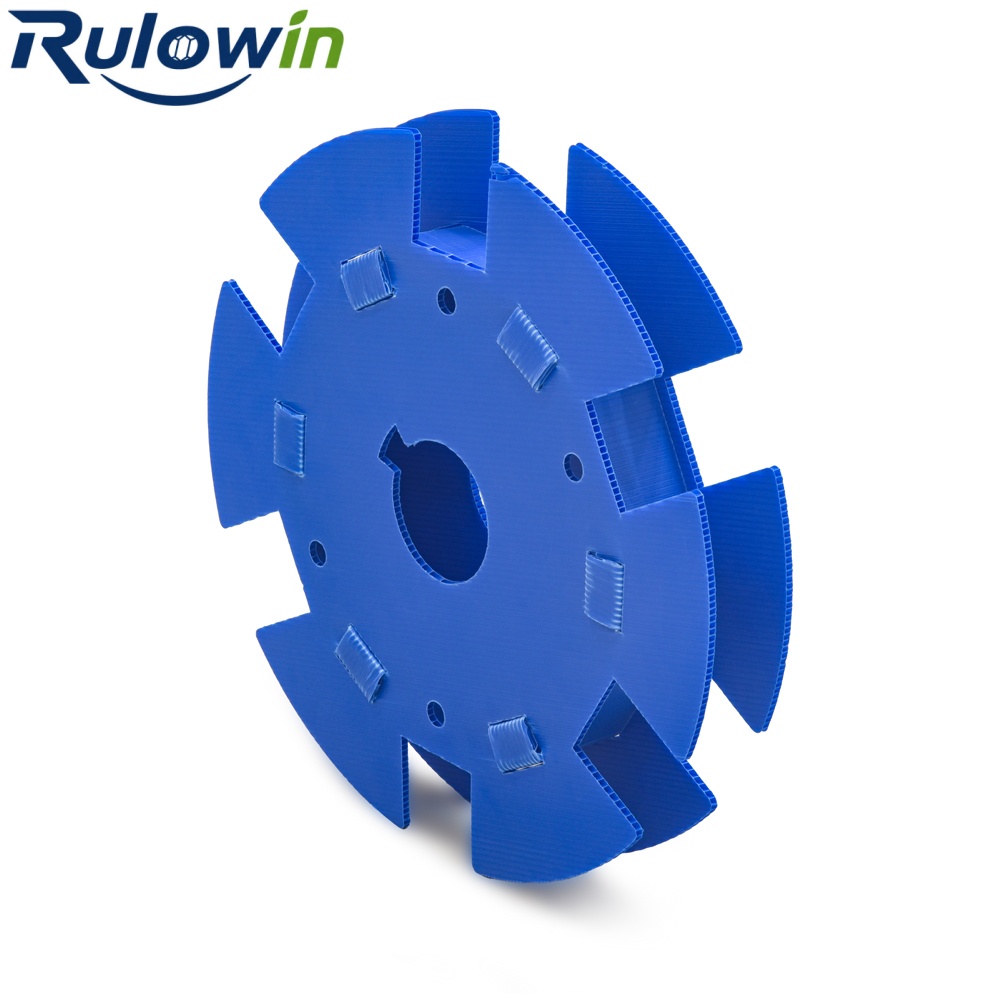
Colour coding works well until it does not. Two years outdoors and the red spools are pink, the blue ones are pale grey, and the people who rely on the colour scheme are guessing. The mechanism is understood and it is partly predictable.
Why colours fade
Two separate processes, often happening at once:
- Pigment degradation. Ultraviolet breaks down the colourant itself. Some pigments are inherently more lightfast than others, and the difference between a good one and a poor one is large.
- Polymer degradation. The polypropylene surface itself degrades under UV, producing the chalky surface described in our UV article. Chalking scatters light and washes the colour out even when the pigment is intact.
The second one is why a pigment that performs well indoors fails outdoors, and it is why UV stabilisation of the base polymer matters as much as pigment choice.
Which colours hold up
General patterns, with the caveat that specific pigments within a colour family vary enormously:
- Inorganic pigments — most oxides and many mineral-based colours — are typically more lightfast and more opaque. Generally the safer choice for outdoor use.
- Organic pigments give brighter, cleaner colours and are often less lightfast. Fine indoors, variable outdoors.
- Carbon black is excellent for UV resistance, which is why black is the default for outdoor plastic. It protects the polymer as well as holding its colour.
- Whites and pastels tend to show dirt and chalk more visibly, even where the pigment itself is stable.
- Bright reds, oranges and some blues are the usual complaints.
The practical specification
Worth saying explicitly rather than hoping:
- The spool will be stored outdoors (or not) — this is the fact that drives everything
- Whether the colour is functional — identification — or cosmetic
- How long the identification needs to remain legible
- Whether UV-stabilised material is required alongside the pigment
Functional colour and cosmetic colour are different requirements and get specified the same way far too often.
What helps
- Specify UV-stabilised base polymer as well as a lightfast pigment. Pigment alone does not stop chalking.
- Choose fewer, well-separated colours rather than many similar ones. A faded red and a faded orange are indistinguishable; red and blue remain distinguishable even when both have faded.
- Avoid relying on colour alone for anything critical — combine it with a marking or a shape. The argument made in our markings article.
- Consider darker shades where the choice is free, because they show fading less.
- Keep a reference spool stored indoors so you can tell how much has been lost.
That last one is cheap and surprisingly useful. Fading is gradual enough that nobody notices without a reference.
What does not help
- Choosing a brighter initial colour to allow for fading — it starts vivid and fades to the same place
- Coatings or paints applied after manufacture — they wear off, and they fail at the rim first
- Assuming the colour you chose last time will be the same pigment, which is worth checking if consistency matters to you
Testing before committing
If the colour is functionally important and the spools will live outside, ask for samples and put them where they will actually be used. Six months in your yard tells you more than any datasheet. It costs nothing but patience, and it is the only test that accounts for your particular conditions.
Our article on running a pilot covers this in more general terms; colour is one of the cases where a pilot genuinely earns its keep.
What we can tell you
Which of our standard colours for hollow board spools hold up best outdoors, whether a specific colour is available in a UV-stabilised grade, and honestly — where we think a colour will not survive your conditions and another identification method would serve better.