
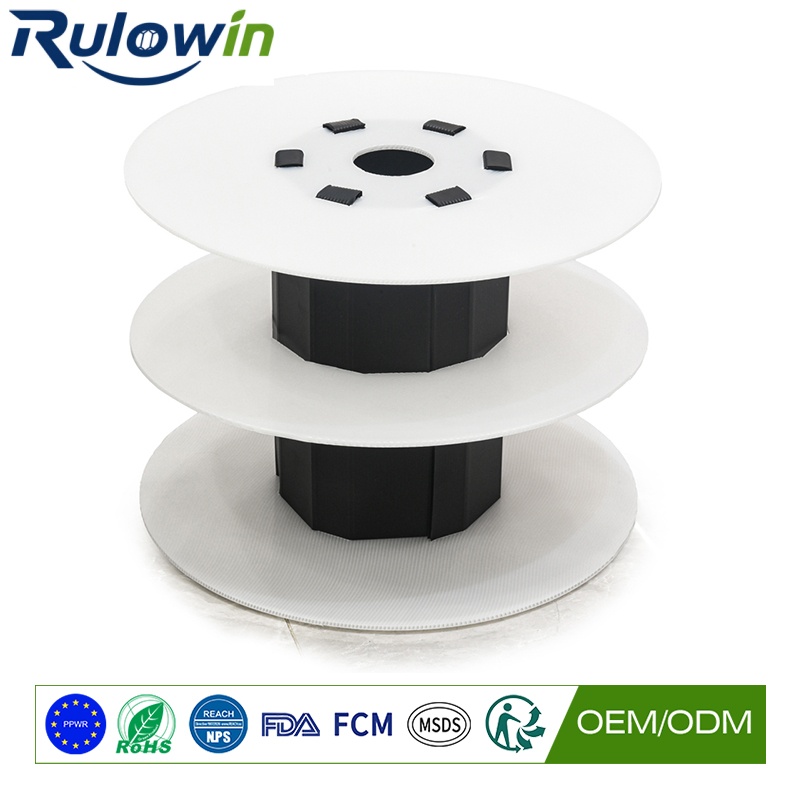
Somebody proposes spending more on packaging to win customers. It is a plausible argument and it is worth examining honestly, because it is sometimes true and often an excuse for spending money that would be better used elsewhere.
Where packaging does influence the decision
From what buyers say, and from what we see:
- When it creates work. Packaging that is hard to handle, hard to store, or hard to dispose of is a real cost to the customer and it is remembered. Removing that work is worth something.
- When it causes failures on their line. A spool that jams their equipment costs them far more than the spool. Reliability here genuinely influences repeat business.
- When they have a sustainability requirement they have to report against. Reusable packaging with documented trips can be the difference between qualifying and not.
- When it fits their existing infrastructure. Not glamorous, and often decisive.
Note the pattern: in every case the value is in removing a cost or a risk, not in the packaging being nicer.
Where it does not
- Appearance for its own sake. Nobody has ever chosen a cable supplier because the spool was attractive.
- Premium materials where the duty does not require them. An over-specified spool is invisible to the customer and costs you money.
- Features the customer will not notice and would not pay for if they did.
- Matching a competitor’s packaging on the theory that theirs must be better.
The two questions worth asking
Does this change anything the customer experiences? If not, it is a cost decision, not a sales one — and it should be justified on cost.
Would the customer pay for it if it were itemised? A useful test. If the answer is clearly no, it is not winning any orders.
Where spending on packaging genuinely pays
- Reducing damage in transit. Every damaged delivery costs more than the packaging saved.
- Reducing customer handling time. Directly valuable to them, often cheap to fix.
- Consistency. Sending the same thing every time is worth more than sending something better occasionally.
- Making returns effortless if the spools are returnable, which protects your asset and costs the customer nothing.
- Preventing the specific failures that generate complaints — the ones catalogued across this series, most of which are cheap to prevent.
The sustainability case, honestly
Reusable packaging can genuinely win business where a customer has reporting obligations. It can also lose it, if the return process creates work they did not want.
Worth noting that the claim only holds if the trips actually happen — which is why the counting problem in our trip tracking article matters commercially, not just environmentally.
What actually wins orders
In this sector, in our observation: price, lead time reliability, product consistency, and whether problems get fixed quickly. Packaging appears on that list only when it fails — a good spool is invisible and a bad one is very visible indeed.
That is the honest answer. The goal is to have packaging that nobody mentions, and the money is better spent on making sure it never creates a problem than on making it impressive.
What we would tell you
If you are considering spending more on our hollow board spools, tell us what you are trying to achieve and we will say whether the spend would do it. Where the answer is no, we will say so — we would rather sell you the right spool than a dearer one.
And if your actual problem is damage, handling or returns, those are usually cheaper to fix than the specification.