
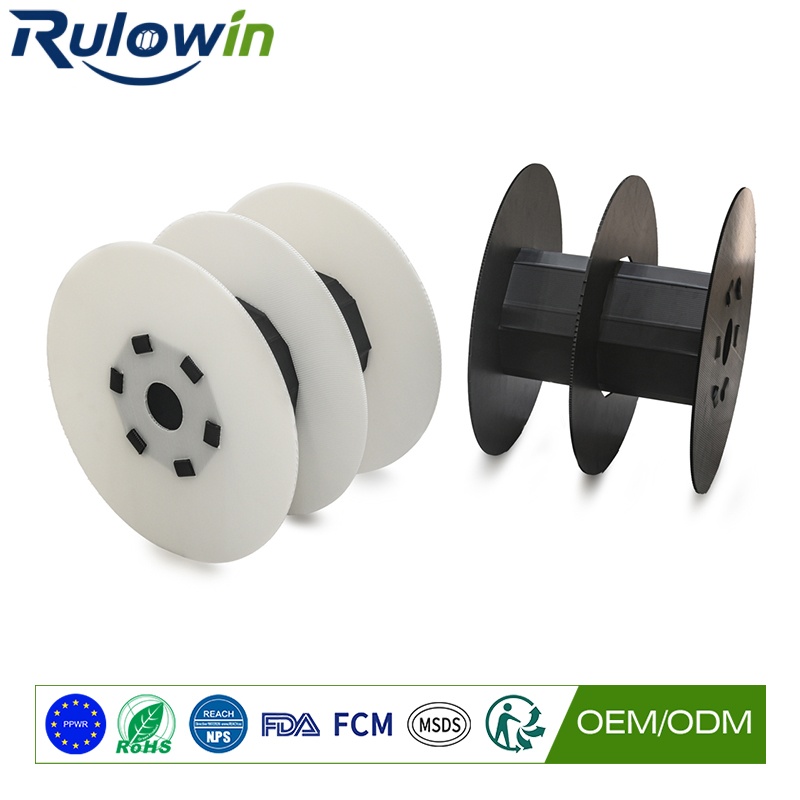
A spool sample is awkward to ship: bulky relative to its value, likely to be declared at some nominal amount, and usually needed yesterday. This is close to the ideal recipe for sitting in a customs warehouse.
Why samples cause more trouble than orders
A commercial shipment has a commercial invoice, a value and a buyer. A sample has a plausible claim to being worth nothing, and customs authorities worldwide have heard that one before. Combine with:
- Awkward dimensions that attract inspection
- Eager shipping methods chosen for urgency
- Incomplete paperwork because it is “only a sample”
- Recipients who do not normally import and have no customs relationship
Declare it properly
Put a genuine commercial value on the paperwork even when no money changes hands. Samples do get declared as low-value, but it needs to be:
- A defensible figure for the item, not zero
- Marked clearly on the invoice as sample, not for resale
- Accompanied by a proper description — “PP hollow board spool, sample” rather than “parts”
- With the correct HS code, which is worth establishing properly once rather than guessing each time
The cost of a declared value slightly above zero is usually a small duty amount. The cost of getting it wrong is weeks.
Packing for the journey, not for the drawing office
Samples are often beautifully packed because someone is proud of them, and get destroyed in transit because nobody thought about the handling:
- Nested or knocked down wherever the construction allows — see the options in our nested versus assembled article
- Protected at the rim, which is where impacts land
- Heavy enough to be handled roughly by machinery rather than thrown by hand
- Clearly marked, so the recipient can identify what arrived
Ship more than one
This is the recurring mistake. One sample gets shipped, then something needs testing destructively, or drops during testing, or needs to go to another department, and the whole process stops while a second one is arranged.
Ship three or five. The incremental freight is trivial and the schedule risk is not. Our sampling article makes the same argument from the testing side.
Send what you will actually produce
A persistent failure mode: a beautiful hand-finished sample ships out, the customer approves it, production cannot reproduce it. Then everyone is unhappy and nobody did anything wrong exactly.
Ask explicitly whether the sample is representative of production, or made specially. It is a fair question and a good supplier will answer it plainly.
Tell the recipient it is coming
Include the contact details that will actually get used by customs — a person, a phone number, an email that is monitored. Most delayed shipments are contact failures rather than documentation failures.
Confirm who is handling clearance at the receiving end. If your customer has never imported before, this will be their problem and they may not know it.
Lead time honesty
Sampling usually fits into a project timeline that assumes it is quick. In practice: making the samples, consolidating shipping, transit, clearance, and then the customer’s own evaluation schedule. Each stage is estimated optimistically and they multiply.
Sample lead time is usually the longest single item in getting a new spool into service, and it is nearly always the one nobody planned for.
What we do
For our hollow board spools we will quote samples honestly, tell you whether they are production-representative, ship nested where possible, and put a real value on the paperwork. We will also tell you when sending samples is the wrong move — sometimes a drawing and a set of measurements answers the question faster and for nothing.