
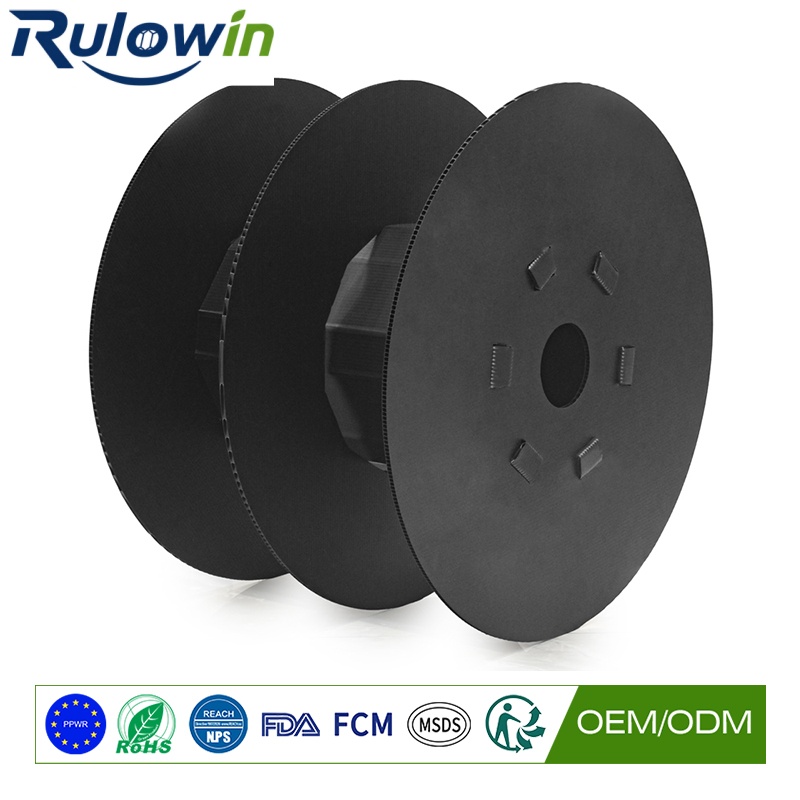
Packaging rarely gets a quality agreement. Products do, packaging gets recourse to nothing, and yet a bad batch of spools can disrupt a line more thoroughly than a bad batch of anything else, because there is nothing to fall back on.
Why it matters for returnables specifically
A one-trip packaging problem is contained — you use them up and move on. A returnable spool batch with a dimensional issue sits in your fleet for years, reappearing every time those spools come round. This is the same argument made about first-article inspection in our article on first-article inspection, and it compounds here.
What goes in one
Half a page, genuinely. Six things:
1. The critical dimensions and how they are measured
Not every dimension from the drawing — the handful that matter. Bore, probably. Traverse width where it indexes. Core diameter where bend radius governs. Perhaps concentricity.
Include how each is measured, because “bore diameter 50 mm” is ambiguous and “bore diameter measured with a three-point bore gauge at two positions, average of readings” is not.
2. Acceptance limits and sample size
How many you check, and what happens when one is out. AQL tables exist if you want formality; “five per delivery, accept on zero failures, reject the batch on two or more” works if you do not.
Simpler is better here, because whatever you write has to be applied by whoever is on shift.
3. What happens when something fails
The clause everybody forgets:
- Does the supplier replace the whole batch or just the failures?
- Who pays freight on returns?
- How quickly, and does production stop in the meantime?
- Is there a credit note or a replacement shipment?
Running without spools is expensive, so the timeline matters more than the cost allocation.
4. Change notification
The supplier must tell you before changing anything material: resin grade, construction, tooling, production site, surface treatment.
This is the clause that prevents most long-term drift. A spool can be nominally the same drawing and behave quite differently if something upstream changed, and without notification you will discover it as an unexplained quality problem.
5. Retained reference samples
Both sides keep a signed-off sample from the agreed standard. Discussed in the first-article article, and it is the fastest way to settle any later disagreement — you compare against the physical object rather than against a drawing interpretation.
6. Records
What inspection data comes with each delivery, and how long it is kept. The practical value is described in our article on keeping spool records — the summary being that the data is only useful if it exists at the moment you want it.
What not to put in one
- Every dimension from the drawing — it creates work without catching anything (see the tolerances discussion in our tolerance article)
- Aspirationally tight limits nobody can hold
- Penalty clauses that are disproportionate and therefore never invoked
- Anything requiring equipment you do not have
Getting it agreed
Raise it at quotation rather than afterwards. Every supplier is more flexible before they have built anything, and asking questions early is cheap. A supplier who refuses to discuss acceptance criteria is answering a question you wanted answered.
Reviewing it
Annually, or after anything has gone wrong. A quality agreement that has never been revisited drifts away from what is actually happening, and the drift is always in the direction of less rigour.
Our position
We will sign one for our hollow board spools, including declaring tolerances we can actually hold rather than optimistic ones. Fabricated hollow board has real process variation, and pretending otherwise in a quality agreement guarantees an argument later.
Better to write honest numbers in from the start.