
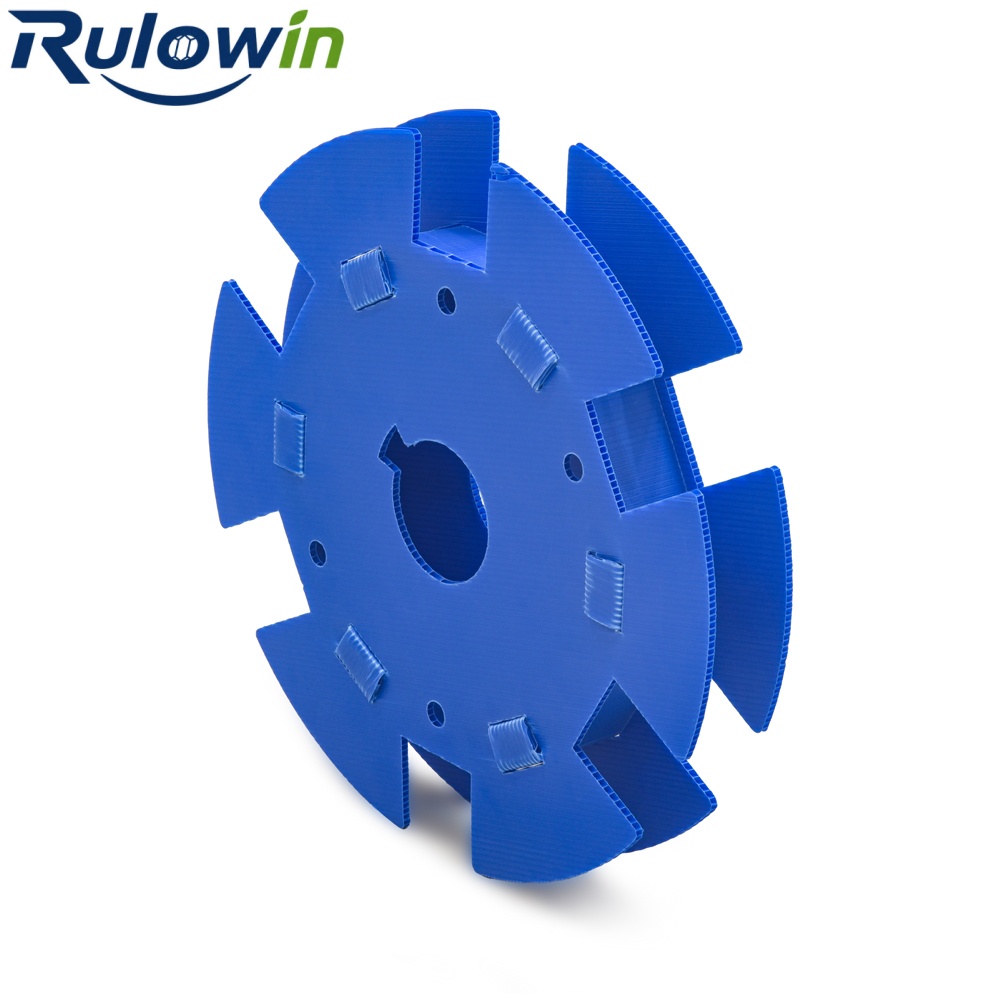
Spools end up outside because there is never enough room inside. That is a legitimate decision, but it is one with a chemistry consequence, and the consequence is not visible for several months — which is exactly long enough for a whole batch to be affected before anybody notices.
What sunlight does
Ultraviolet radiation breaks polymer chains at the surface of polypropylene. The process starts at the surface and works inward, and it has a signature that is easy to recognise once you have seen it.
First the gloss goes and the colour shifts slightly. Then the surface chalks — a pale, powdery film that comes off on your hand. Then micro-cracks appear at high-stress points: rib roots, the flange rim, the bore. By the time you can see the cracks, the material at the surface is measurably degraded.
The important part is that the damage is at the surface while the load is carried through the section. A spool can chalk badly and still carry a static load. What it will not do is survive an impact: a knock that would have left a scuff on a new spool cracks a badly chalked one.
How quickly
It depends overwhelmingly on latitude, season and whether the spools are under any cover at all. Rather than quote months — which would be misleading without your location — here is the practical sequence to watch for:
- Gloss loss: the clock has started, but nothing is wrong yet
- Chalking: the surface is degraded; start planning
- Micro-cracking at stress points: do not put this spool at tension
Untreated material moves through those stages in a season of strong sun. Stabilised material takes years. That difference is the whole argument.
What stabilisation buys you, and what it costs
Stabilisers do not block UV; they interrupt the degradation chemistry, and they are consumed doing it. So a stabilised spool does not last forever outdoors — it lasts much longer, and then it behaves like an untreated one.
Two practical notes. Carbon black is both a pigment and an excellent stabiliser, which is why outdoor plastic is so often black; if you want a light colour outdoors you need a proper UV package rather than assuming the colour helps. And stabilisation should be matched to the climate — a spool for a Nordic yard and one for a Gulf yard are not the same product.
Cover beats grade
The cheapest intervention is not a better material, it is a roof. Even partial cover — a canopy, or stacking spools and sheeting the top layer — removes most of the exposure, because the worst damage comes from direct sun on the upward-facing surfaces.
A yard with three sides and a roof costs a fraction of the difference in material price and extends service life more than most grade upgrades do.
Inspecting a yard
Walk it and do the chalk test: rub a thumb across an upward-facing flange. If a pale film comes off, the surface is degraded. Check the rim and the rib roots for fine cracks by flexing gently — cracks there are retirement criteria, not cosmetic notes.
Sort into three piles: fine, chalked but sound, and cracked. Chalked-but-sound spools can stay in service for light duty or move indoors; cracked ones come out. Then fix whatever put them in the sun in the first place, because otherwise you will be doing the same sort next year.
Rotate the stock
The spools at the back of the yard are the oldest and the most degraded, and they are also the ones least likely to get used. First-in-first-out on a spool yard sounds like unnecessary discipline; it is the difference between a fleet that ages evenly and one with a hidden pocket of junk at the back.
If your spools live outdoors, send a photograph of the worst one and we can tell you roughly where it sits in the sequence — and whether the rest of the yard is likely to be in better shape.