
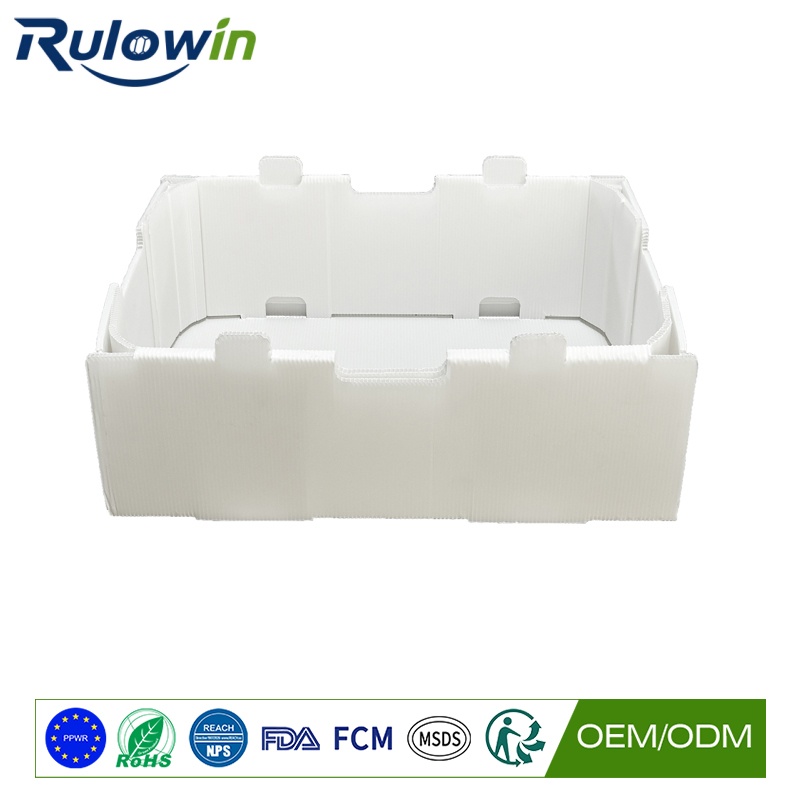
Produce moves in reusable crates, and those crates arrive in one of two ways: somebody owns them, or somebody rents them by the trip. Both models work well, and both fail in characteristic ways. The interesting question is not which is better in the abstract but where your volume, your lanes and your tolerance for administration put you.
How pooling works
A pool operator owns a fleet of standard crates. You order crates, fill them, ship them; the crates continue to the retailer and eventually return to the pool; you are charged per trip or per cycle. Washing, repair, loss and tracking are the operator’s problem.
The genuine advantages:
- No capital outlay, and cost that scales with volume rather than sitting on the balance sheet.
- Interchangeability. A standard crate flows through retailer back doors that are physically set up for it — on conveyors, in wash systems, in display units.
- Loss is somebody else’s accounting problem.
The costs are the per-trip fee, which is real and recurring, and the loss of control. You cannot change the crate’s colour, print, footprint, vent pattern or lid design. Your branding goes on a label, not on the asset. And at peak season everyone else wants crates too, so availability becomes part of your planning.
How owning works
You buy a fleet, run your own loop, wash and repair as needed. The advantages are the mirror image: cost per trip falls steeply with utilisation, the crate is exactly what your product and your line need, and the asset carries your branding for its whole life.
The costs are the ones pooling hides:
- Capital, and the replacement spend that follows annual shrinkage.
- Washing and repair infrastructure, or a contract for it.
- Tracking — even a modest fleet needs counting, and losses at customer sites are yours to chase.
- Seasonality. If your volumes swing, you own a fleet sized for the peak and idle for the rest of the year.
Where the line falls
As a rough guide, three factors push you toward pooling and three toward owning:
Toward pooling: strong seasonality; many retail customers with different crate requirements; no existing wash or return infrastructure; volumes you cannot forecast confidently.
Toward owning: steady, year-round volumes on a small number of lanes; a captive loop (grower to own packhouse to own DC and back); a product that needs a non-standard crate — different depth, vent pattern, or footprint; a brand reason to own the visible asset.
Both lists are about the same underlying thing: who carries the variability. Pooling sells you insulation from variability and charges for it. Owning exposes you to it and rewards you for managing it well.
The middle option most people skip
A hybrid works well for many growers and packers: pooled crates for retail-facing lanes where interchangeability matters, and an owned fleet for captive lanes — own fields to own packhouse, or grower to processor under contract — where the loop is closed and cheap to run.
The owned fleet absorbs the base load, the pool absorbs the peaks, and neither is sized for the worst week of the year. It does require two crate standards on site, which is a small operational cost in exchange for a much smaller fleet.
Questions to ask before committing
- What is the realistic cost per trip for each model, using your actual trip counts and your actual shrinkage estimate — not the operator’s?
- What happens in your peak week? Pool availability, and whether your own fleet covers base load.
- If you own: who washes, who repairs, and what is your assumed annual loss rate? Get this number from your own history, not from a supplier.
- If you pool: what is the contract term, and what happens to your volumes if you want to leave?
If you want a second opinion, send your annual volume, seasonality curve and lane list. We supply crates rather than pooling services, so we have no reason to push you toward owning — and the arithmetic is the same either way.