
Ask why a pallet sleeve is a particular height and the answer is usually about the product: it needs to be tall enough for the parts. That is the wrong constraint. Almost anything can be made to fit a range of heights with a different pack pattern or a layer of dunnage — but the height you choose fixes how many units you get per container, and that number is on every invoice for the life of the programme.
The arithmetic nobody does
Pallet sleeves are sold on the basis that they fold flat, which they do, and that this saves on return freight, which it does. What gets less attention is the outbound leg, where the sleeve height determines how many loaded pallets stack into a container and how much air ships with them.
Work it backwards. Take the internal height of the container you actually use, subtract the pallet height, and divide by the loaded pallet height. Round down. That gives you layers per stack. If a 50 mm reduction in sleeve height buys you an extra layer, it is very often worth more than the packing convenience of the taller sleeve — and it applies to every shipment, not just the first.
Two standard heights and why they persist
Two heights come up repeatedly in European and Asian industrial packaging, roughly at the low end and the middle of the common range. They persist because they interoperate: they stack together on a pallet in useful combinations, and they suit the rack beam spacings that most warehouses already have.
Deviating is fine when there is a reason — an awkward product, a specific rack, a customer requirement — but it should be a decision rather than an accident. A bespoke height locks you out of the second-hand market for sleeves and makes sharing a pool with anyone else harder.
Stack strength falls with height
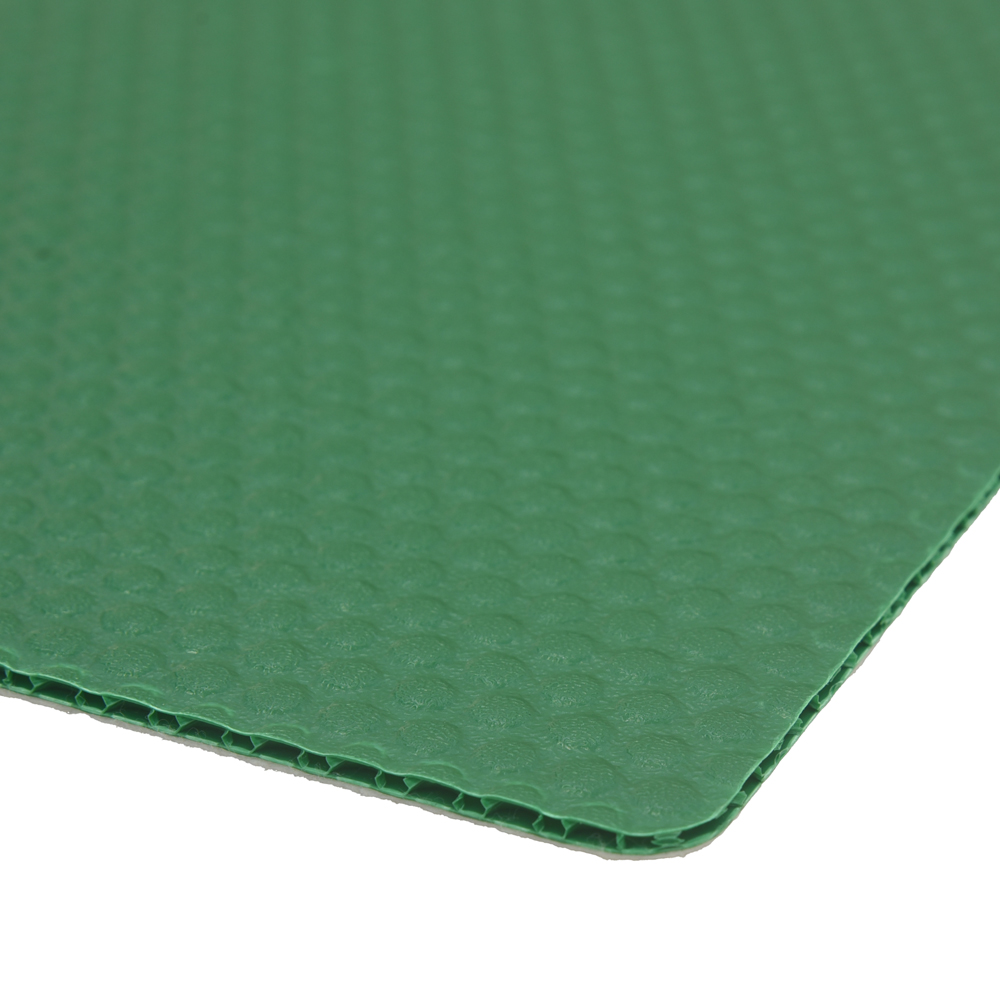
This is the physical constraint that actually bites. A taller sleeve carries more load on its lower walls and buckles sooner, so height and load rating are linked. If you need both height and a high stack rating, the wall construction has to change — thicker sheet, or a honeycomb wall rather than twin-wall.
The pallet sleeve box format handles this well because the sleeve and the lid/base are specified separately. You can keep one footprint and one pallet pattern and vary the sleeve construction to suit the load case.
What the lid does to the calculation
A pallet sleeve system is three parts: base tray, sleeve, lid. The lid usually nests into or over the sleeve top, and that interface consumes 20–40 mm of usable internal height. If you specify internal height without accounting for the lid intrusion, the parts that fitted on paper will not fit in reality.
Specify internal clear height and make the supplier confirm it with the lid fitted. It sounds obvious. It is missed often enough to be worth saying.
Time to pack is a real cost
Taller sleeves take longer to pack. Reaching over a 1 m sleeve wall to place a part at the far corner is slower than working over a 600 mm one, and if the pack is done by hand at a line side that difference is paid for on every single pallet.
There is a genuine optimum here and it is usually lower than engineers first choose. Two shorter pallets often pack faster and stack better than one very tall one, even where the parts would technically fit in either.
A working method
- Fix the pallet footprint first — euro or industrial, whichever your lanes actually use.
- Calculate container fill at several candidate heights and pick the one that maximises units per container, not the one that minimises sleeve count.
- Check stack rating at that height with the heaviest product, at the stacking duration you actually ship for.
- Confirm internal clear height with the lid on.
- Then, and only then, adjust for the product.
Where folding flat changes everything
The return leg is where sleeve boxes earn their keep. A rigid pallet box returns at full volume; a sleeve collapses to a few centimetres. On a long lane where empties come back by truck or container, that single property can be the whole business case, and it is worth modelling explicitly rather than treating as a bonus.
If your empties currently travel full-size, work out the volume you are shipping each year and what it costs. The number is usually larger than expected, and it makes the sleeve height decision much easier to settle.